
Last updated November 14, 2026
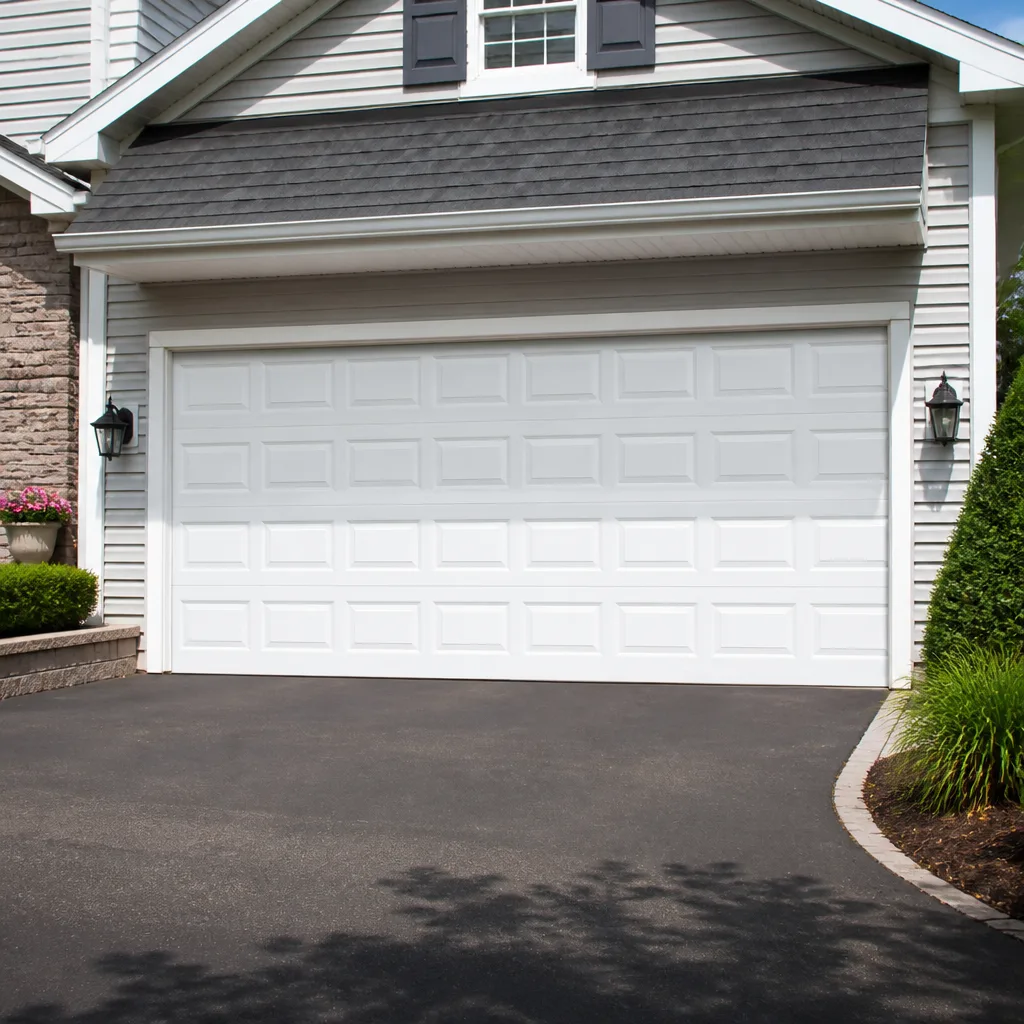 Raised-panel steel
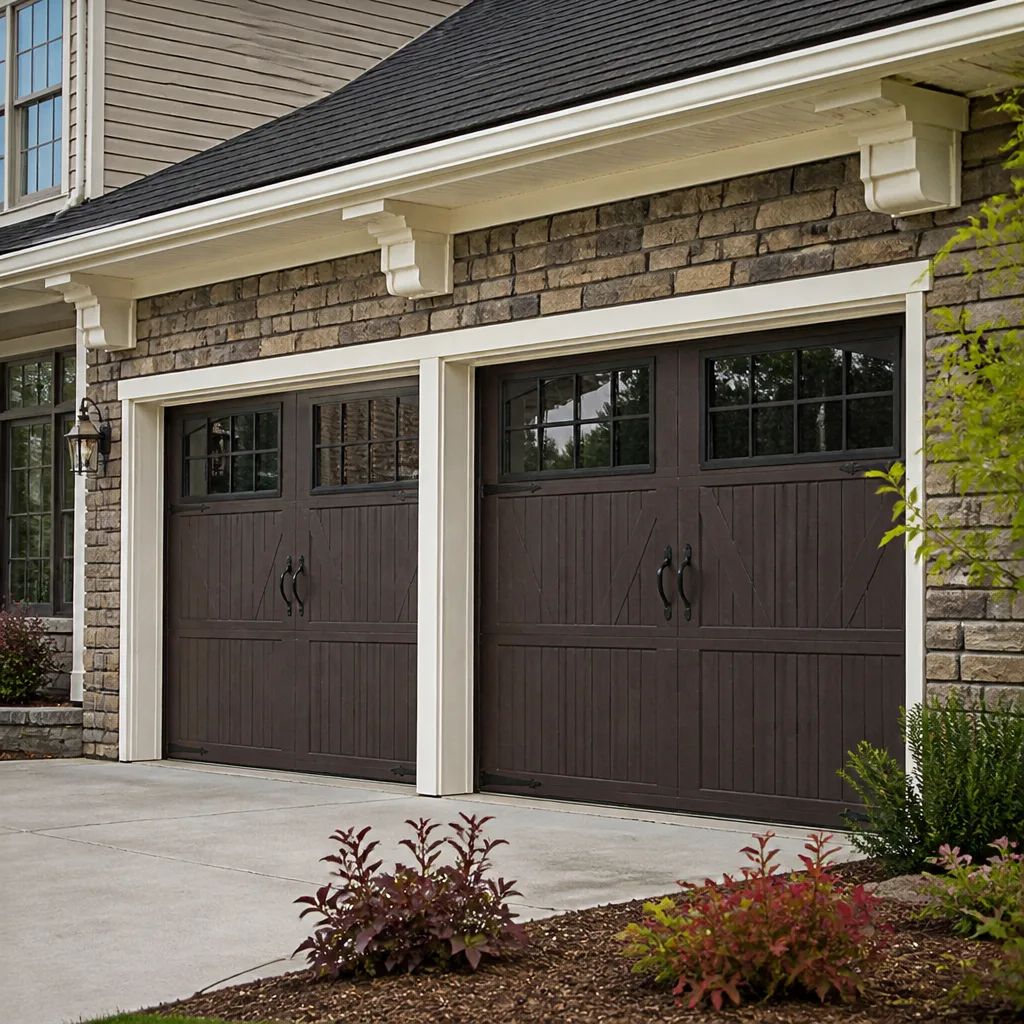 Carriage house
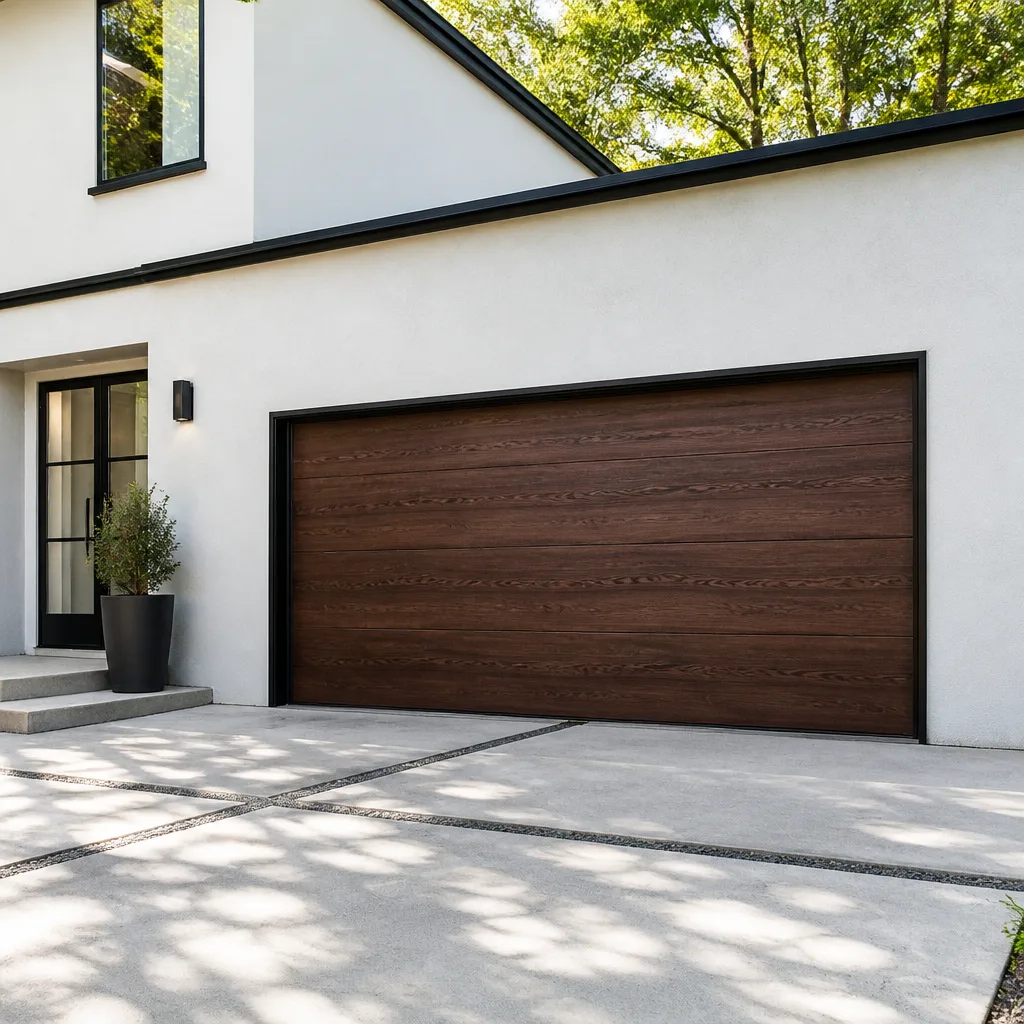 Modern flush
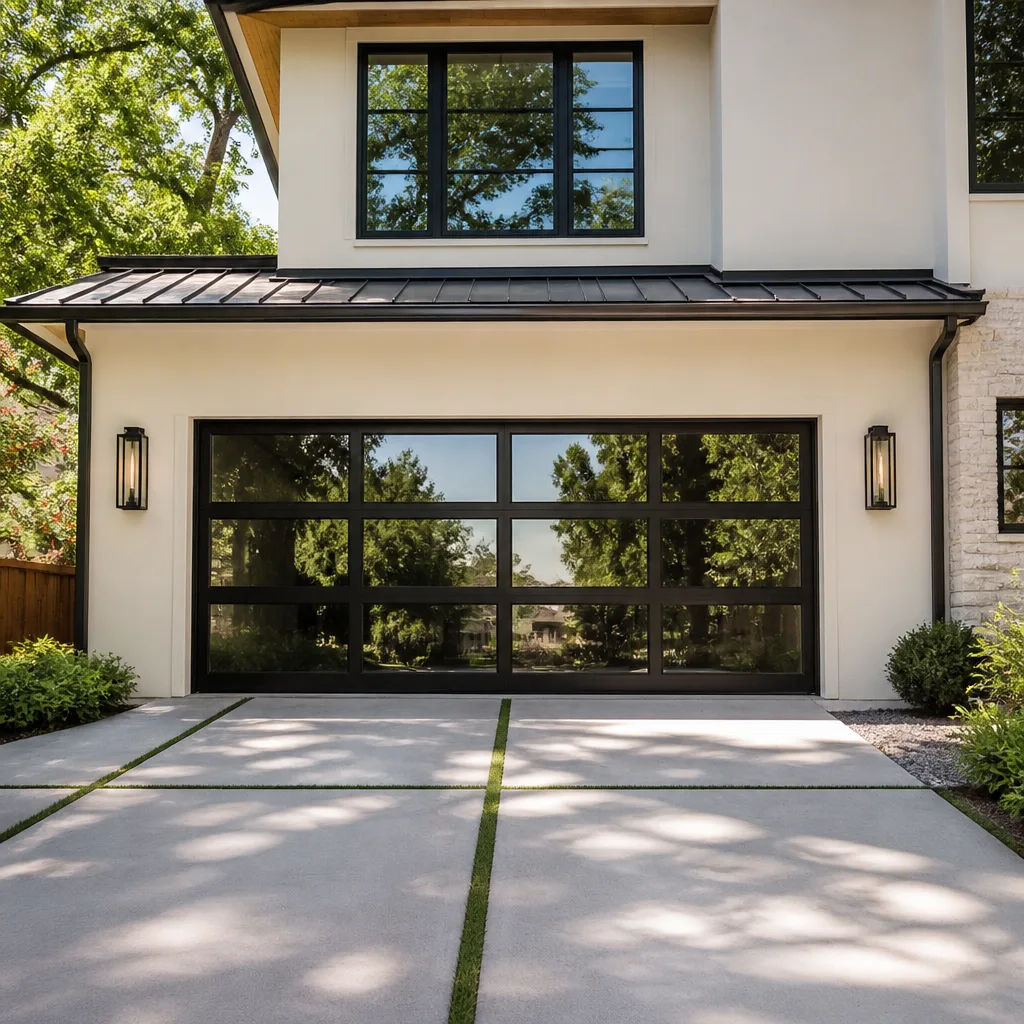 Full-view glass
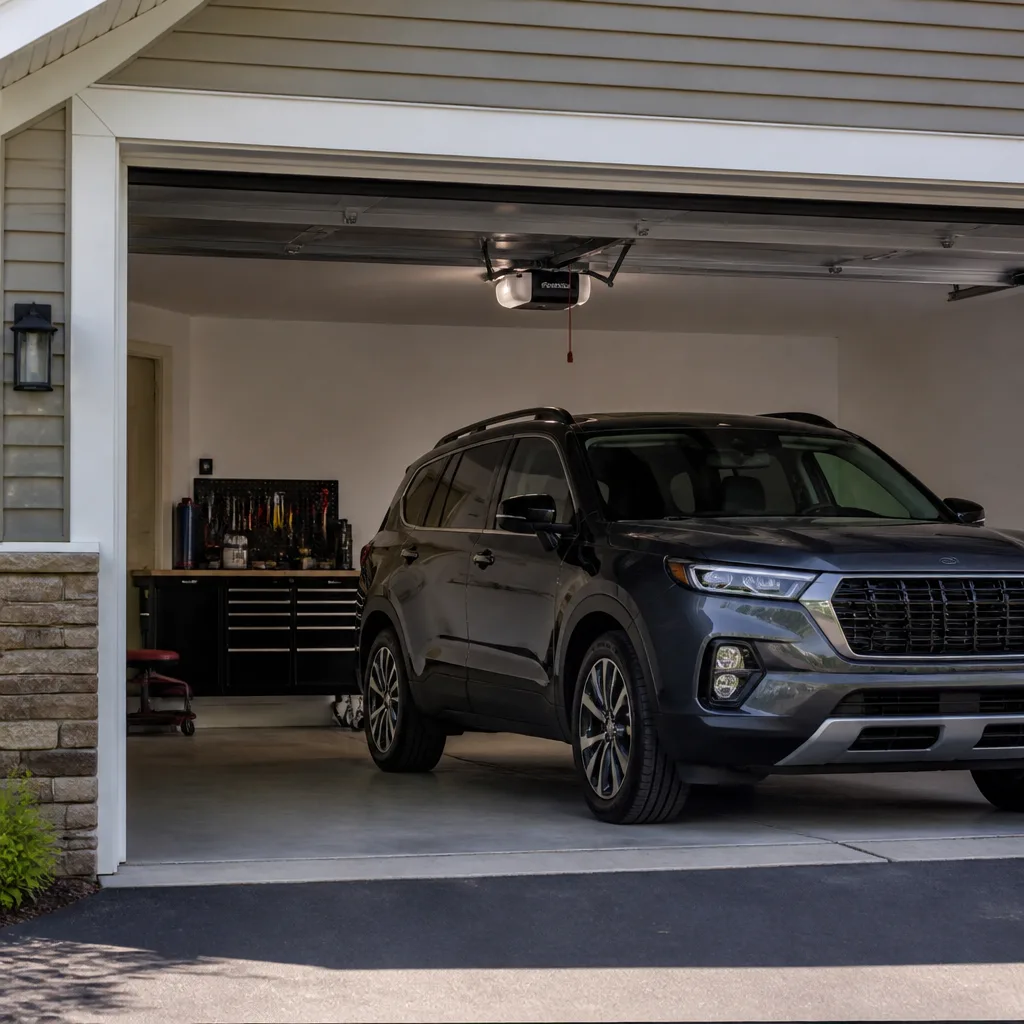 LiftMaster openers
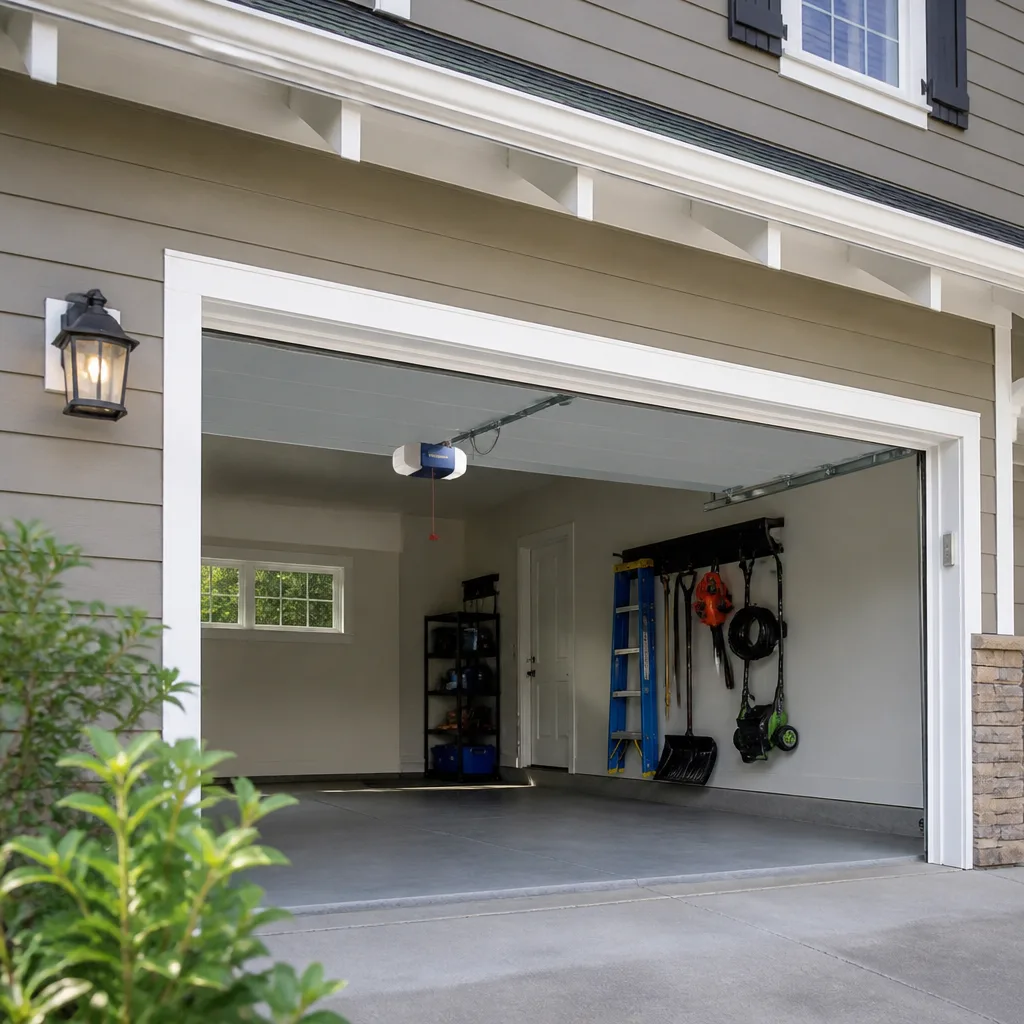 Chamberlain openers
Full 25-point door and opener safety check with every visit - springs, cables, rollers, tracks, and your LiftMaster or Chamberlain opener included
You get a price before we start. It does not change when the pro arrives.
Get your free estimateGarage Door Repair Maintenance Checklist for Beaumont Homeowners
The number one reason garage doors in Beaumont fail early isn’t neglect in the obvious sense. It’s that homeowners follow a national, one-size-fits-all maintenance schedule that skips the two checks that matter most here: hardware inspection right after a storm rolls through, and seal inspection before summer’s heat and humidity settle in. A checklist built for a dry climate misses the way Southeast Texas air works on springs, rollers, and rubber. This guide gives you a schedule built around Beaumont’s actual seasons, with a clear line between what you can safely do yourself and what a trained technician should handle.
Quick Answer
A garage door maintenance checklist for Beaumont should follow the local season, not the calendar quarter. Run a full hardware and track inspection in April before storm season, re-inspect tracks, cables, and panels within 48 hours of any named storm, check and refresh lubrication in December when the air dries out, and inspect weatherstripping before summer heat peaks. Balance and spring tension checks belong to a technician; cleaning, visual checks, and lubrication are reasonable homeowner tasks.
Styles & brands we work with
- Raised-panel steel
- Carriage house
- Modern flush
- Full-view glass
- LiftMaster openers
- Chamberlain openers
Table of Contents
- Why Beaumont Garage Doors Fail Differently
- The Month-by-Month Maintenance Calendar
- Humidity, Lubrication, and Why the Wrong Grease Fails
- Weatherstripping and Beaumont’s UV Intensity
- What You Can Check Safely vs. What Needs a Technician
- The 48-Hour Post-Storm Checklist
- Opener and Smart-Drive Maintenance
- Seasonal Noise and What It’s Telling You
Why Beaumont Garage Doors Fail Differently
Most garage door guides are written as if every house sits in the same climate. Beaumont doesn’t cooperate with that assumption. The combination of long humid summers, intense sun on south- and west-facing doors, and periodic heavy rain from tropical systems puts specific stress on parts that a generic schedule never mentions. A spring in a dry climate might wear quietly for years. A spring in Beaumont is working through a cycle of moisture absorption and drying that changes how its metal behaves. Rollers pick up grit and old grease that turns tacky in the humidity. Weatherstripping hardens under UV faster than national guides assume.
That’s why the sequential order matters. If you grease in August, you’re trapping moisture and grit. If you inspect weatherstripping in January, you’re evaluating it at its best and missing the summer failure window. If you wait until something breaks to look at your tracks, storm-season movement may already have knocked them out of alignment. The schedule in this guide is ordered around those specific failure patterns, not the template most homeowners find online.
In our experience working on garage doors across the region, the doors that last longest aren’t always the newest or most expensive. They’re the ones where hardware was inspected after storms, seals were replaced before they cracked, and the right lubricant was applied at the right time of year. Understanding Lantern Garage Door Repair means understanding that maintenance is seasonal here, not generic.
Key Takeaways
- Beaumont’s humidity, UV, and storm cycles create failure patterns a national checklist misses entirely.
- Task order matters: inspect before you lubricate, and seal-check before summer heat.
- April pre-storm inspection and September-October post-storm inspection are the two highest-value windows.
- Homeowners can handle cleaning, visual checks, and lubrication; springs, cables, and balance tests belong to technicians.
- Weatherstripping fails faster under Beaumont’s UV load and needs inspection before cracks allow water in.
The Month-by-Month Maintenance Calendar
Here’s the sequence we recommend for garage doors in Beaumont, mapped to what the weather is actually doing through the year. You don’t need to memorize it. Pin it, and refer back at the start of each season.
- January – Post-holiday visual check. Look for dented panels, loose hinges, and any bolts that have backed off. Cold, dry air is the easiest time to hear a rattle or a grind that summer humidity muffles.
- February – Lubrication of hinges, rollers, and the torsion bar bearing plates with a silicone or lithium complex lubricant. Check the opener’s safety reverse function.
- March – Weatherstripping inspection. This is the second of two yearly checks. Look for hardening and cracking before summer heat accelerates them.
- April – Pre-storm season prep. Full hardware check, track alignment, bolt torque, and balance test if you’re comfortable testing. This is the most important single inspection of the year.
- May through August – Light monthly checks. Listen for new noises, watch for slow response from the opener, and look for water stains near the bottom weather seal after heavy rain.
- September-October – Post-tropical-event inspection within 48 hours of any named storm. Full track, cable, and panel inspection as described below.
- November – Pre-holiday lubrication and hardware check before the busiest travel months. Listen for grinding from the opener.
- December – Dry-winter lubrication. Refresh rollers, hinges, and torsion bearing plates. Check the bottom seal for accumulation of grit that will damage it over the following year.
If that schedule feels like too much, the two windows you should never skip are April and September. Everything else is a soft habit you can pick up when you have a minute.
Humidity, Lubrication, and Why the Wrong Grease Fails
Standard lithium grease fails faster on Beaumont garage doors than the tubes suggest. Here’s why. Humidity makes the grease film absorb moisture, and once moisture is inside the film, it starts to break down the metal under it. That’s the opposite of what lubricant is supposed to do. On a door in a dry climate, grease stays where it’s put and lasts. On a door in Beaumont, the grease becomes the problem unless it’s specified for high-humidity conditions.
What holds up better here:
- Silicone-based lubricant – repels water and doesn’t gunk up in ways that trap grit.
- Lithium complex grease – a step up from plain lithium, better at staying put under moisture.
- Dry-film PTFE spray – good on hinges and pivot points where you don’t want a sticky buildup.
- Purpose-made garage door lubricant – matched to the specific metal and moving parts.
What to avoid: thick axle grease, WD-40 used as a long-term lubricant, and anything labeled “all-purpose” without checking the moisture rating. On springs and rollers, use a light coat, not a heavy one. Heavy grease in Beaumont attracts grit and holds moisture. And never lubricate the tracks themselves. The door’s rollers need to move inside the tracks; grease on the track surface will make the door ride rough and accelerate wear on the rollers.
Frequency matters here too. In dry climates, once a year is fine for most residential doors. In Beaumont’s humidity, twice a year on the moving parts – and a light touch around the torsion bar bearing plates – keeps the metal protected through the summer. If the rollers or springs on your door are already showing rust or binding, garage door repair can catch those before they turn into a bigger failure.
Weatherstripping and Beaumont’s UV Intensity
Beaumont’s UV load shortens the life of weatherstripping in a predictable pattern. The sun-exposed side of a south- or west-facing door will harden first, usually starting on the outer edges of the bottom seal. Over one or two summers, that hardening becomes cracking. Once it cracks, water gets under the door on the next heavy rain, and the wood frame and threshold take on moisture. On a garage attached to the house, that’s also a pathway for humid air to work its way in.
What to look for on a Beaumont rubber seal:
- Stiff, plastic feel – squeeze the seal. If it doesn’t spring back, it’s lost its flexibility.
- Visible cracks or splits – especially near the outer edges where sun exposure is highest.
- Compression set – the seal is flattening permanently on the side that gets the most sun.
- Water lines on the interior threshold – a sign that water is already getting past the seal.
- Daylight visible under the closed door – the seal isn’t contacting the floor evenly anymore.
In our experience, a Beaumont bottom seal often needs replacement every few years, and the sun-exposed edge usually gives out first. Replacing it proactively before water intrusion starts is far cheaper than dealing with moisture damage to the door frame and threshold. Check it in March before summer, and again in October after storm season. A T-style or U-style bottom seal is generally straightforward for a technician to swap. Panels and window inserts on doors like Clopay and Amarr models also carry UV exposure, and a door facing west all afternoon takes the most wear on those components.
What You Can Check Safely vs. What Needs a Technician
This is the section people skip, and it’s the most important one. Garage doors are heavy machinery under tension. Some checks are simple and safe. Others are genuinely dangerous. Here’s the honest line:
Safe homeowner tasks
- Visual inspection of tracks, panels, hinges, and bolts
- Cleaning tracks with a damp cloth and removing visible grit
- Lubricating hinges, rollers, and bearing plates with the right product at the right weight
- Testing the opener’s safety reverse using a small object in the door’s path
- Listening for changes in noise, speed, or shudder during normal cycles
- Checking weatherstripping on the bottom seal by touch and visual inspection
Tasks that require a technician
- Adjusting or replacing torsion springs
- Replacing cables
- Correcting track alignment after a hard hit or storm
- Balance testing that requires disconnecting the opener
- Any diagnosis of the door’s counterweight system
Springs and cables are the parts to be most careful around. A wound torsion spring holds a large amount of stored energy. If a spring or cable is adjusted or released incorrectly, it can cause serious injury. The same goes for a door that’s come off its tracks: don’t try to force it back into place. We always recommend a trained professional for anything involving the spring system or the cables. That’s not a sales line. It’s a genuine safety boundary.
The safe homeowner version of a balance check without touching the spring system: listen and watch the door closely as it cycles. A door that slams down, jerks up, or sits unevenly when closed is showing signs the balance is off. That’s when you call.
The 48-Hour Post-Storm Checklist
After any named storm passes through Beaumont, run this checklist within 48 hours. Early inspection catches problems while they’re still small.
- Walk the perimeter of the closed door. Look for panel dents, especially on the wind-loaded side. Even a small dent can weaken the panel’s structural rigidity.
- Inspect the vertical and horizontal tracks. Run your hand along each track without touching the door. Look for bends, misalignment at the joints, or gaps where the track mounts to the wall.
- Check the cables for fraying. Cables should be smooth and tight. Frayed wires or a cable that looks slack are a call-a-technician indicator. Don’t touch them.
- Open and close the door slowly. Watch for shudder, hesitation, or a door that doesn’t travel smoothly in the tracks. Any new sound is worth investigating.
- Inspect the bottom seal after heavy rain. Water lines on the interior threshold mean the seal is compromised.
- Check the opener’s safety reverse. Place a small object in the door’s path and confirm the door reverses on contact.
If you see any of these, don’t force the door. Call a technician. Storm damage to tracks and panels is often more serious than it looks from the outside, and a door that comes off its tracks during the next cycle is a bigger and more expensive problem than the original hit.
Opener and Smart-Drive Maintenance
Your opener isn’t a maintenance-free device. It works harder during Beaumont summers, and it’s exposed to the same humidity that affects the rest of the door. Here’s what the annual schedule should include:
- Test the safety reverse function on a monthly basis. This is the single most important opener check. Place a small object in the door’s path and confirm the door reverses on contact. If it doesn’t, call us before using the door.
- Test the photo-eye alignment. The two sensors near the floor should have a clear line of sight. If they’re dusty, wipe them. If they’ve shifted, realign them.
- Check the manual release. With the door closed, pull the red release handle and confirm the door can be lifted by hand. Then re-engage. This is the mechanism you’ll rely on during a power outage.
- Check the battery backup on units that have it. LiftMaster and Chamberlain units with battery backup should be tested a couple of times a year.
- Watch the drive belt or screw. A rubber belt will stretch over years of use. A screw drive can pick up grit. Both will eventually need attention.
- Listen for changes. A Genie or Craftsman unit that suddenly sounds louder or runs slower is telling you something.
If the opener is failing, it’s not always a replacement. Many issues are fixable – a stripped gear, a bad logic board, or a misaligned safety eye. When an opener problem goes beyond the basics, garage door opener repair is the right next step.
Seasonal Noise and What It’s Telling You
Garage door noise isn’t random. Different noises point at different parts, and the season shapes which noises are most likely. Learning to read them saves you from guessing.
- Rattle or clank on opening – usually loose hinges or bolts. Check in April before storm season.
- Squeal or high-pitched squeak – dry rollers or bearing plates. Lubricate in December.
- Grinding – a roller that’s seized, or a track that’s out of alignment. Grinding that starts after a storm means the track moved.
- Stuttering or jerky travel – the balance is off. This is a call-a-technician indicator.
- Loud bang from the door – broken spring. Stop using the door and call us.
- Rumbling from the opener – the drive gear or motor bearing is failing.
- Clunk when the door closes – the bottom seal is compressed unevenly, or the door is contacting the frame.
If the noise changes after a storm, especially after heavy rain, treat it as a track problem first. Beaumont’s weather moves hardware. The April and September inspections catch those changes before they become noise.
Common Mistakes to Avoid
- Following a national quarterly checklist. A one-size template skips the two seasonal inspections that matter most in Beaumont – April pre-storm and September post-storm. Rebuild your schedule around those two windows first.
- Using heavy axle grease or WD-40 as long-term lubricant. Both attract grit and hold moisture in Beaumont’s humidity. Use a proper garage door lubricant matched to the part.
- Greasing the tracks. Tracks need to stay clean, not lubricated. Grease on the track makes the door ride rough and accelerates roller wear.
- Skipping the weatherstripping check before summer. Beaumont’s UV hardens the seal faster than most homeowners expect. Check it in March before the heat, not after water starts showing up inside.
- Force-closing a door that’s off its tracks. This bends the panels and can twist the cables. Once a door is off-track, leave it closed and call a technician.
- Trying to adjust the spring system. Torsion springs are under extreme tension. Anything involving the springs or cables is a professional job, full stop.
- Ignoring opener reverse failure. If the safety reverse doesn’t work, the opener is a hazard. Stop using it and call us.
See the difference
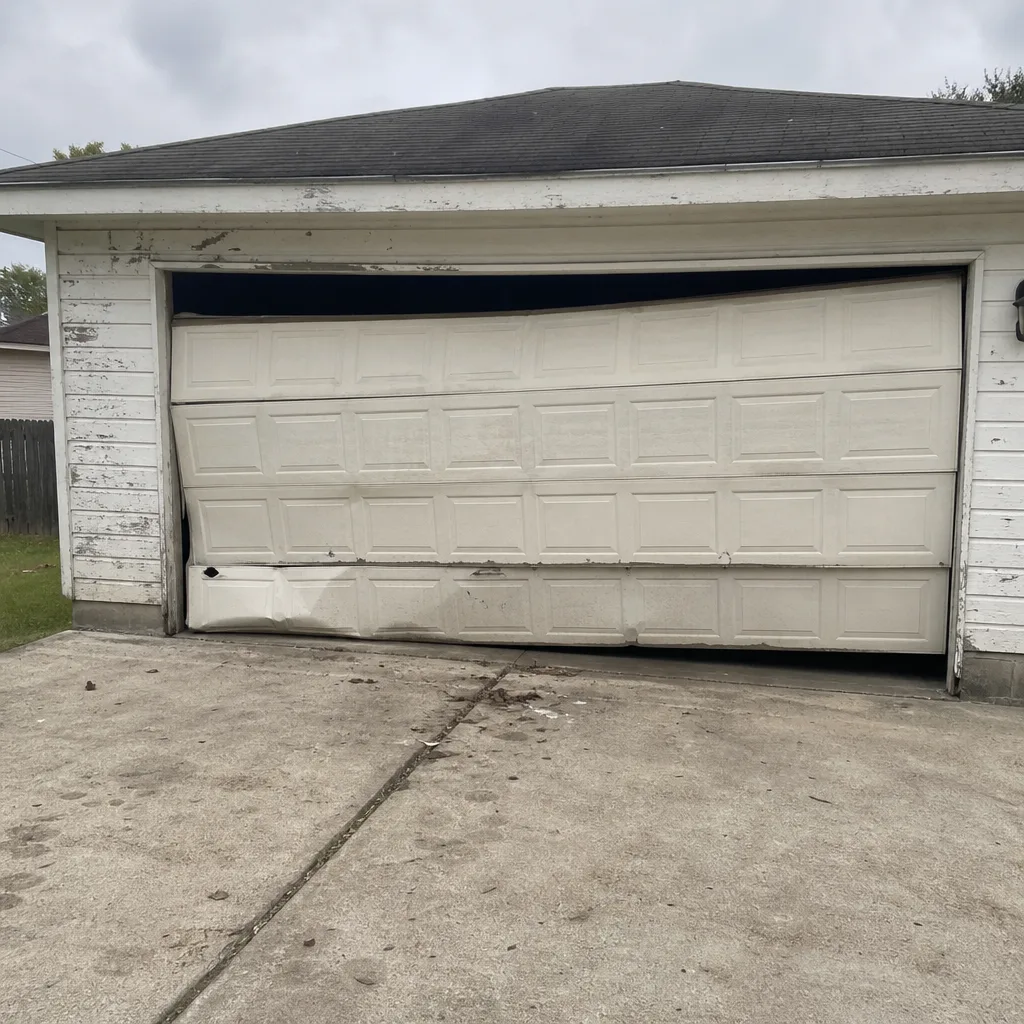 Before
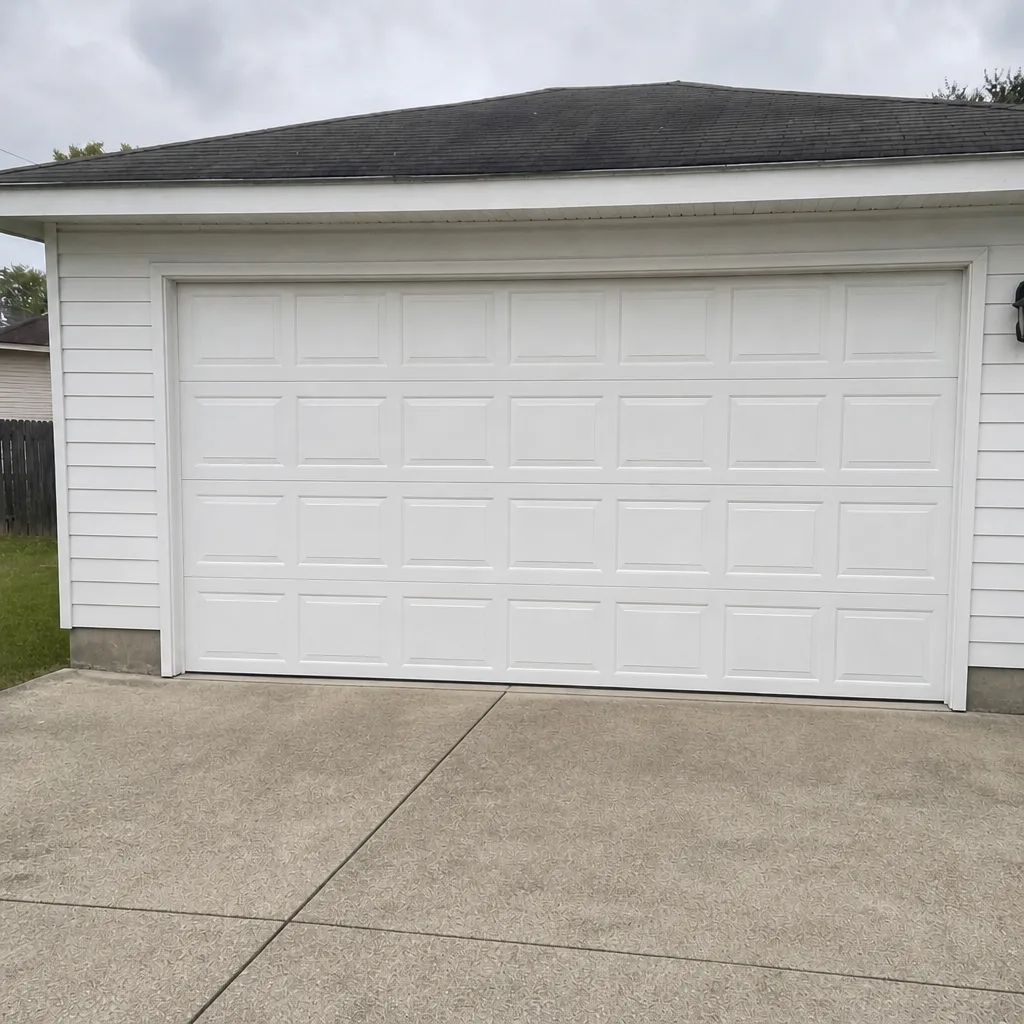 After
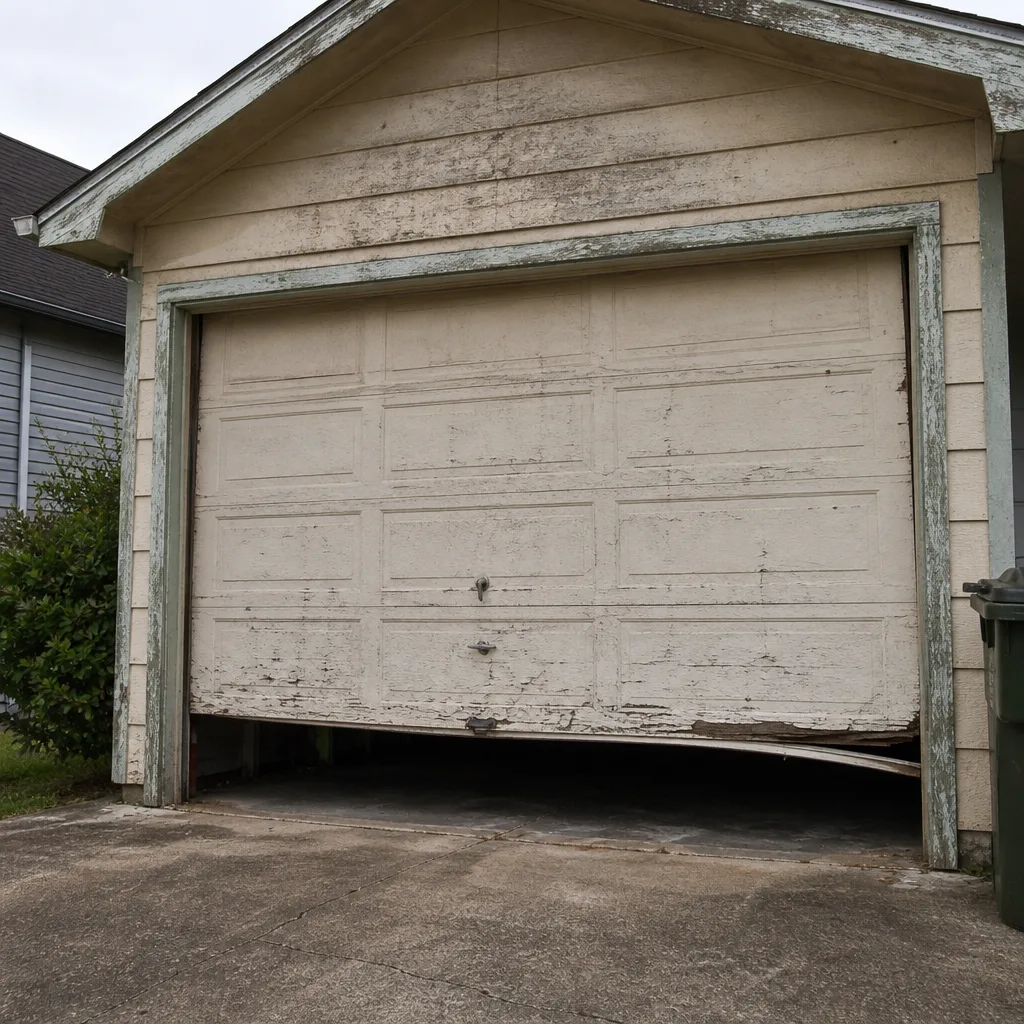 Before
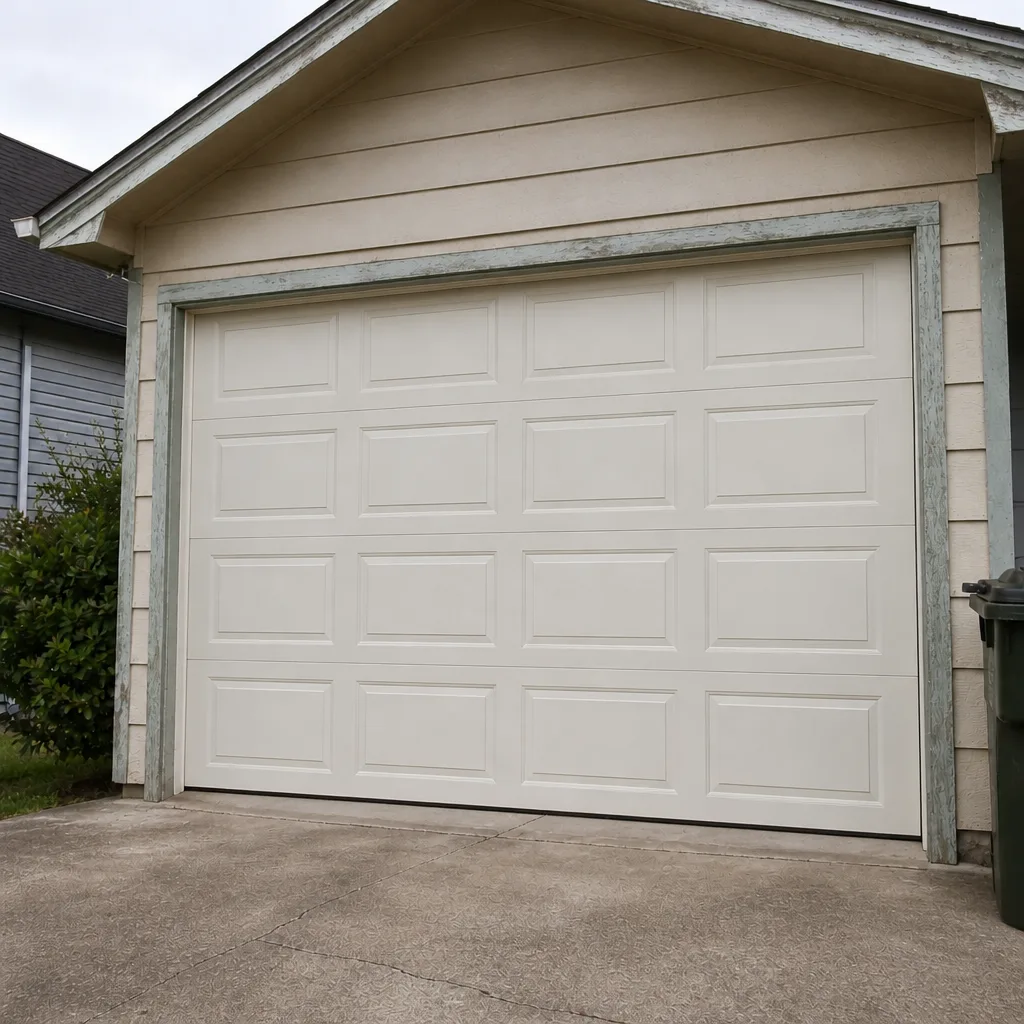 After
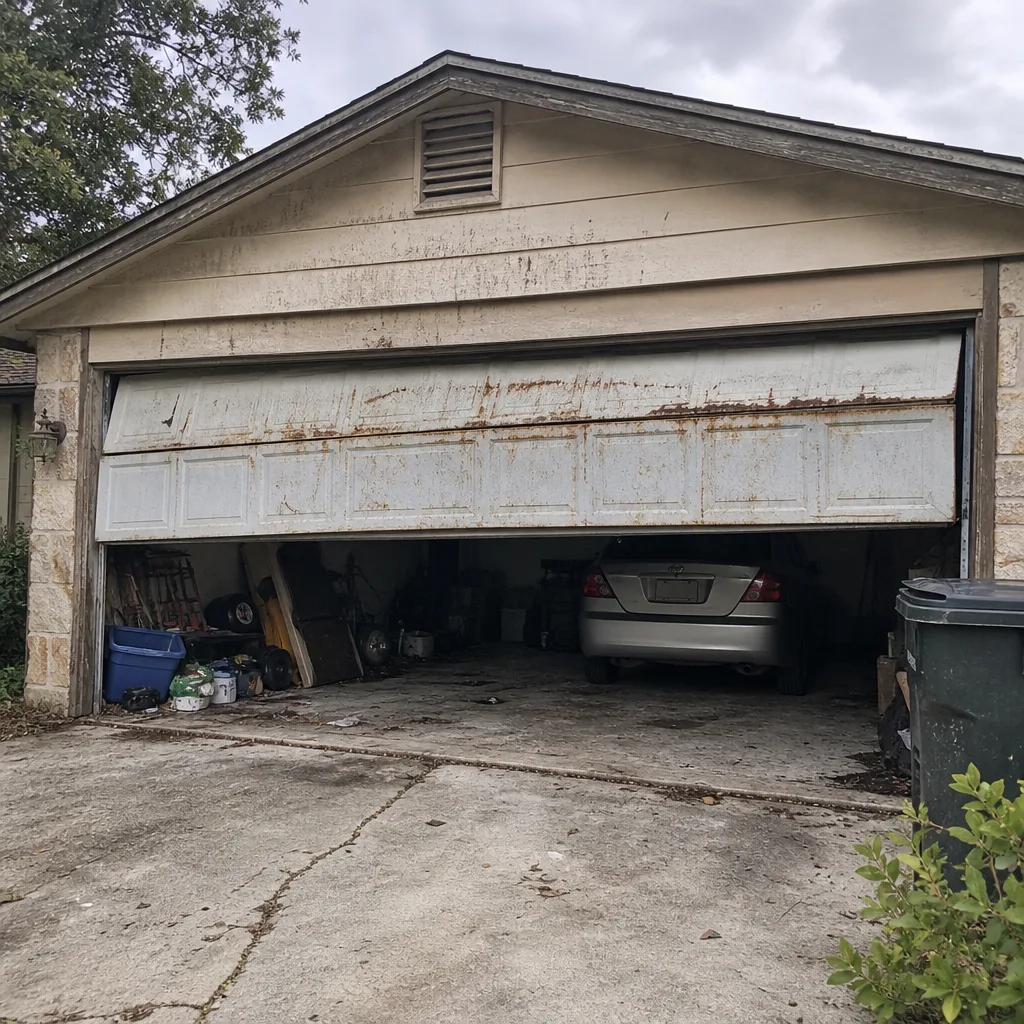 Before
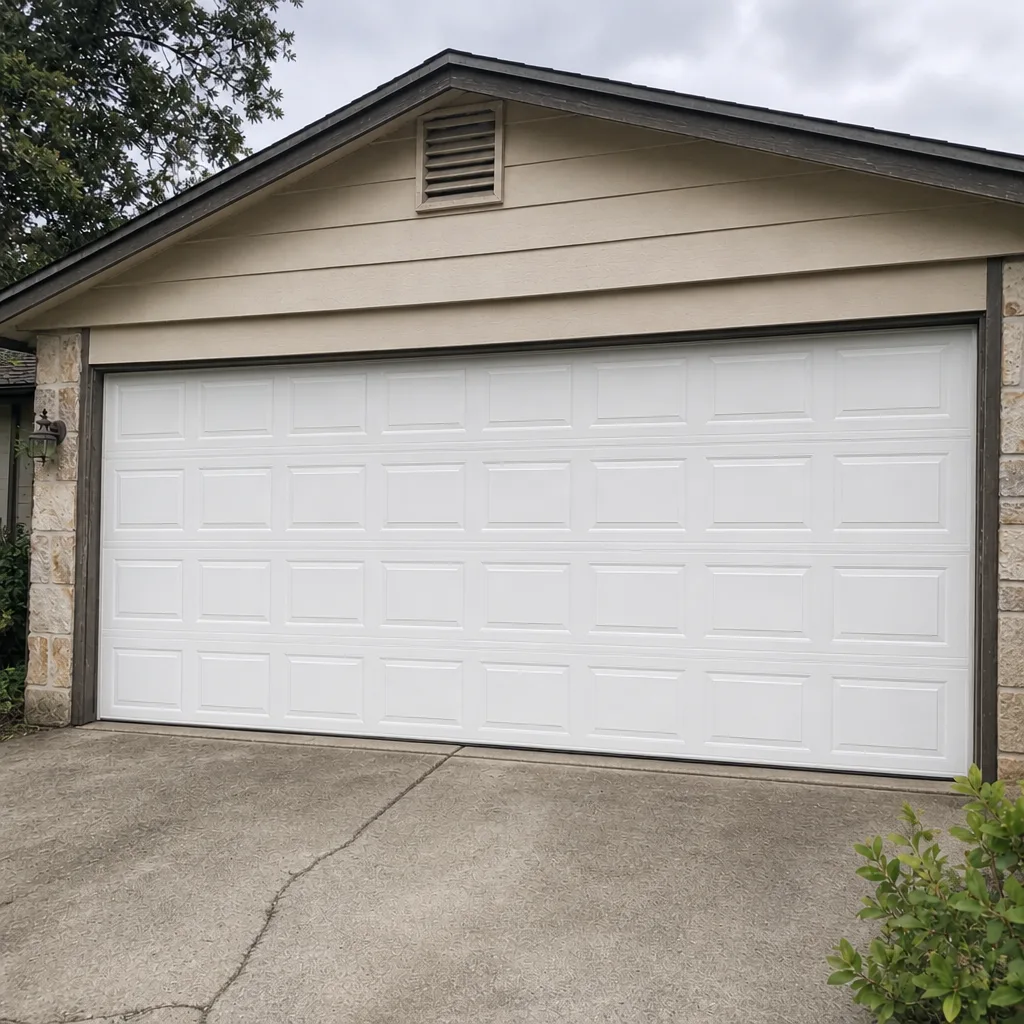 After
When to Call a Professional
Call a professional for anything involving the spring system, cables, or track alignment after a storm. Call if a spring has snapped, if the door comes off its tracks, if you hear a loud bang from the door, or if the door won’t stay balanced when it’s halfway up. Call if the safety reverse on the opener fails and can’t be fixed by a realignment, or if the opener is showing a fault code you can’t diagnose. Call after a named storm has passed through if you see any dented panels, bent tracks, or frayed cables. And call if the bottom seal is cracked and water intrusion has already started – the earlier a seal is replaced, the less moisture damage the frame takes on.
At Lantern Garage Door Repair, we offer free estimates for Beaumont homeowners. Call (833) 549-9776. We answer 24/7. Fast dispatch from 7am to 7pm, Sunday through Friday. Every diagnosis comes with a clear explanation of what failed and what it takes to fix it, and pricing is confirmed before any work starts.
Frequently Asked Questions
Twice a year at minimum, timed to the local climate: once in April before storm season, and once in September-October after the tropical season peaks. Add a light December lubrication to protect the moving parts through dry-winter air. The exact frequency depends on how much use your door gets and whether it faces direct sun.
You can apply a light coat of lubricant to the outside of the torsion springs and bearing plates without adjusting them, but never disassemble or adjust anything. The spring system is under high tension and can cause serious injury. If the door needs an adjustment, call a technician. Call (833) 549-9776 for a free estimate on any spring work.
Beaumont’s summer humidity swells wood components, thickens grease that was applied wrong, and stresses the opener’s drive system. A door that was moving freely in April can start to bind by July. If the door gets noticeably harder to open in summer and easier in winter, the balance is likely off or the lubrication has broken down.
Squeeze the bottom seal. If it feels hard and doesn’t spring back, it’s lost its flexibility. Look for cracks, especially near the outer edges where UV exposure is highest. If you see daylight under the closed door or water lines on the interior threshold, replace the seal before the next storm season. Beaumont’s sun shortens the seal’s lifespan more than a generic checklist assumes.
Within 48 hours of any named storm, check the panels for dents, the tracks for bends or misalignment, and the cables for fraying. Open and close the door and listen for new noise. Test the opener’s safety reverse. If you see any track misalignment, frayed cable, or panel dent, don’t force the door. Call a technician for a professional inspection.
Most cities require a permit for garage door replacement, so ask Beaumont’s building department directly to confirm the current rule. Permits and code requirements can change, and a phone call to the city is the fastest way to get an accurate answer for your address. Beaumont homeowners dealing with a replacement should ask the department before scheduling the work.
The Bottom Line
The single change that saves Beaumont homeowners the most money on garage doors is rebuilding the maintenance schedule around the local climate instead of a generic template. Prioritize April pre-storm inspection and September post-storm inspection. Use the right lubricant for humidity, not standard lithium grease. Check your weatherstripping before summer heat, not after. Stay away from the spring system and cables – those belong to a technician. Once those pieces are in place, the rest of the annual checklist is a habit, not a chore. And when something does fail, or when you’re not sure what you’re seeing, call a specialist. Our technicians have up to 9 years of experience across LiftMaster, Chamberlain, Genie, Clopay, Amarr, Wayne Dalton, Craftsman, and Raynor equipment.
Call (833) 549-9776 for a free estimate. We answer 24/7. Fast dispatch from 7am to 7pm, Sunday through Friday. We’ll walk you through exactly what failed and what it takes to get your door back in working order – clear diagnosis, no surprises.
Written by the team at Lantern Garage Door Repair.