
Last updated November 14, 2026
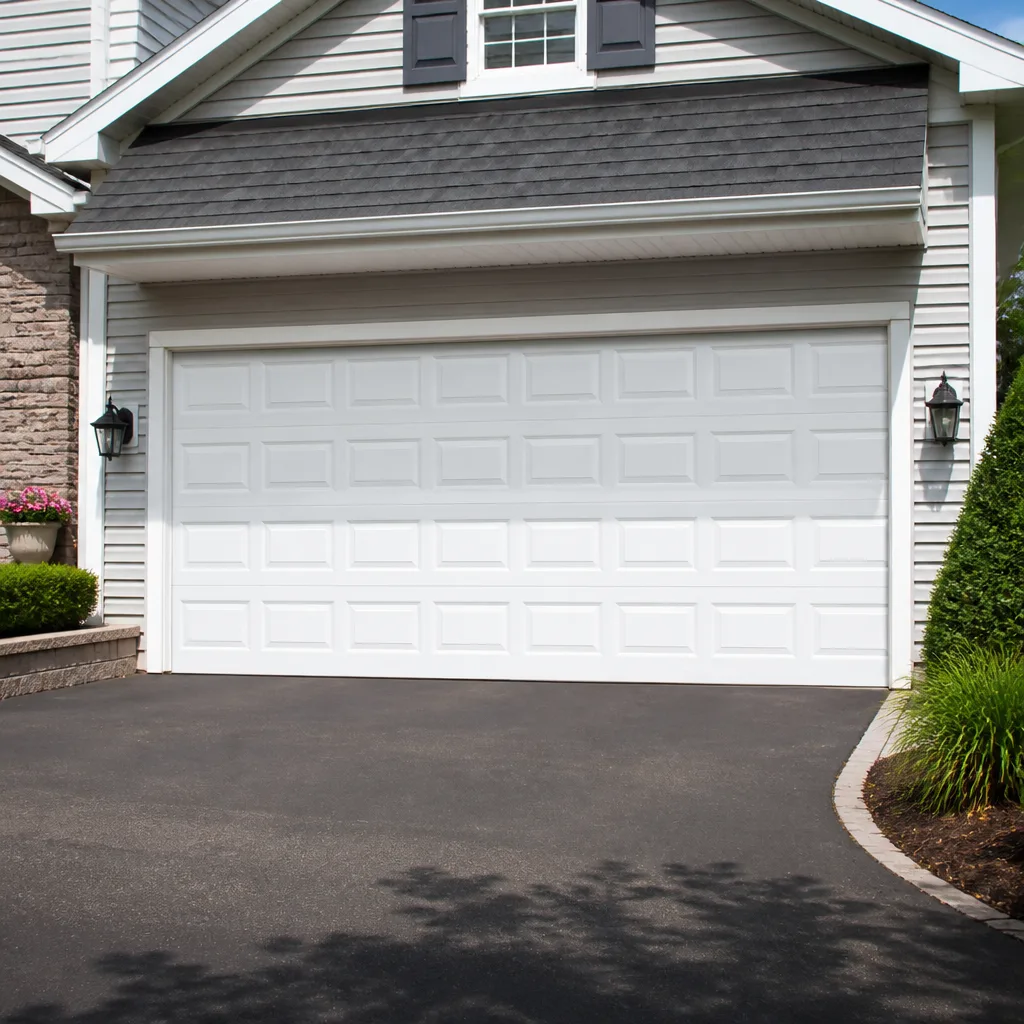 Raised-panel steel
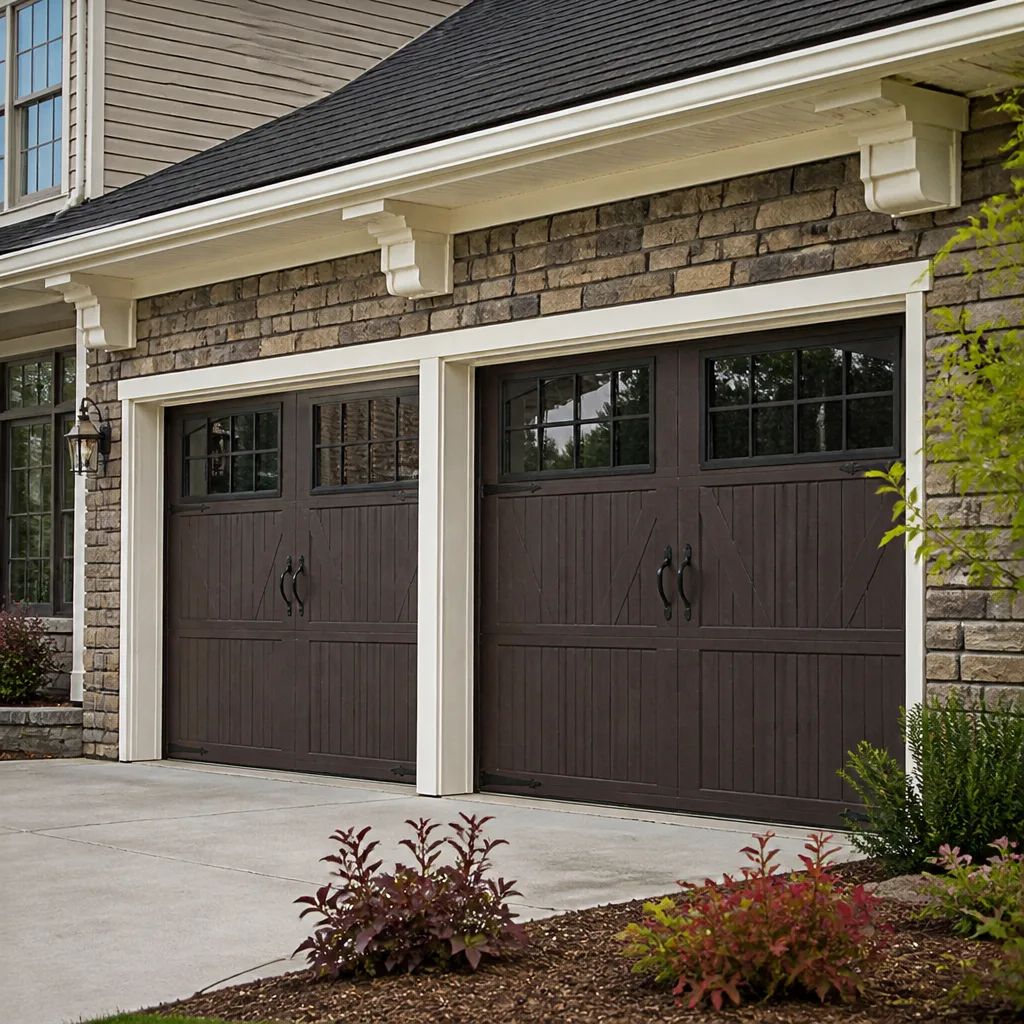 Carriage house
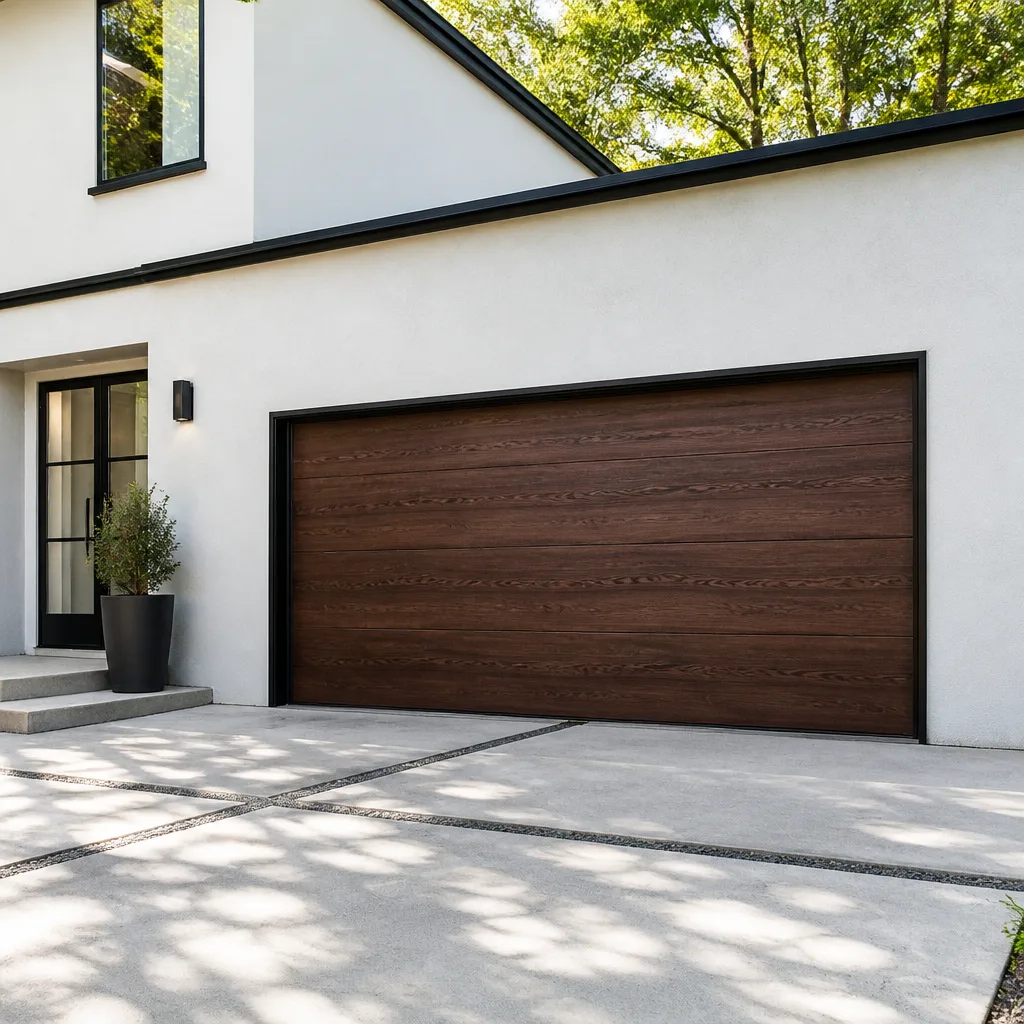 Modern flush
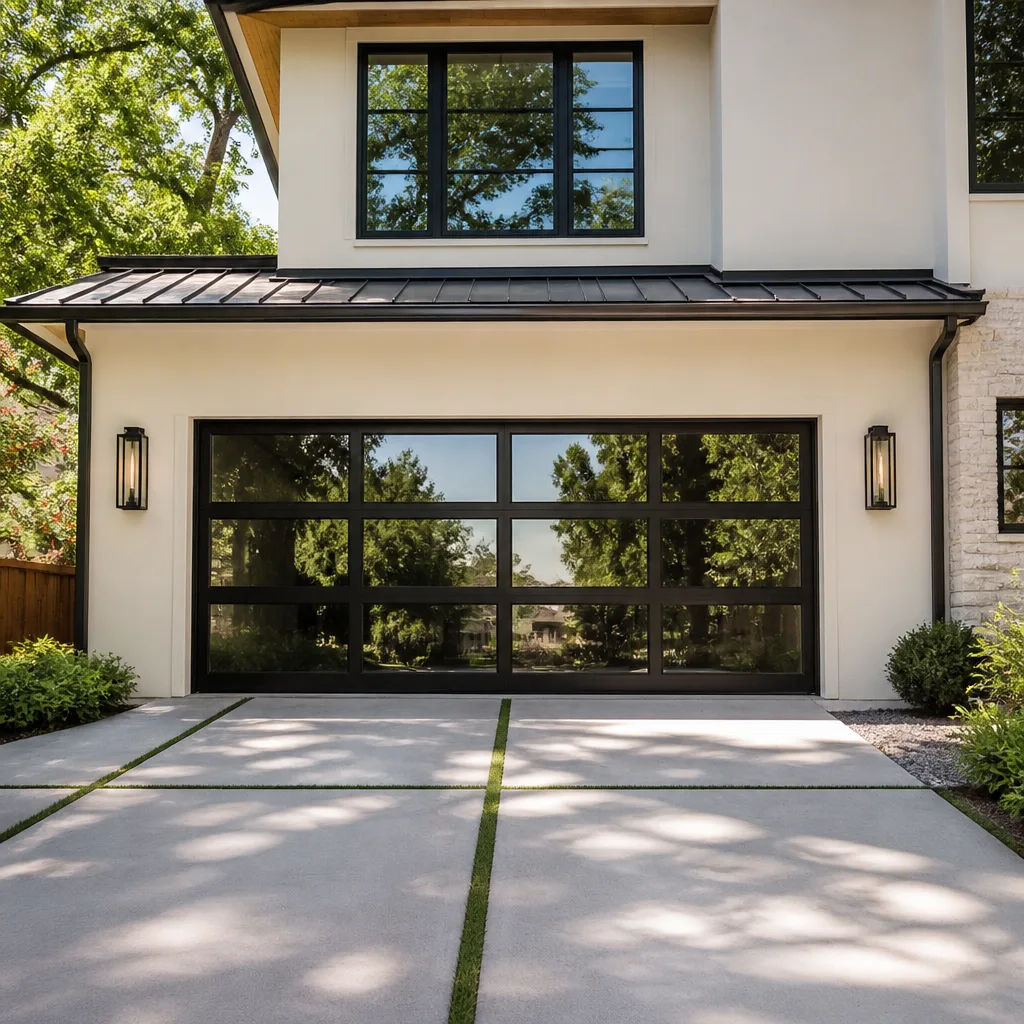 Full-view glass
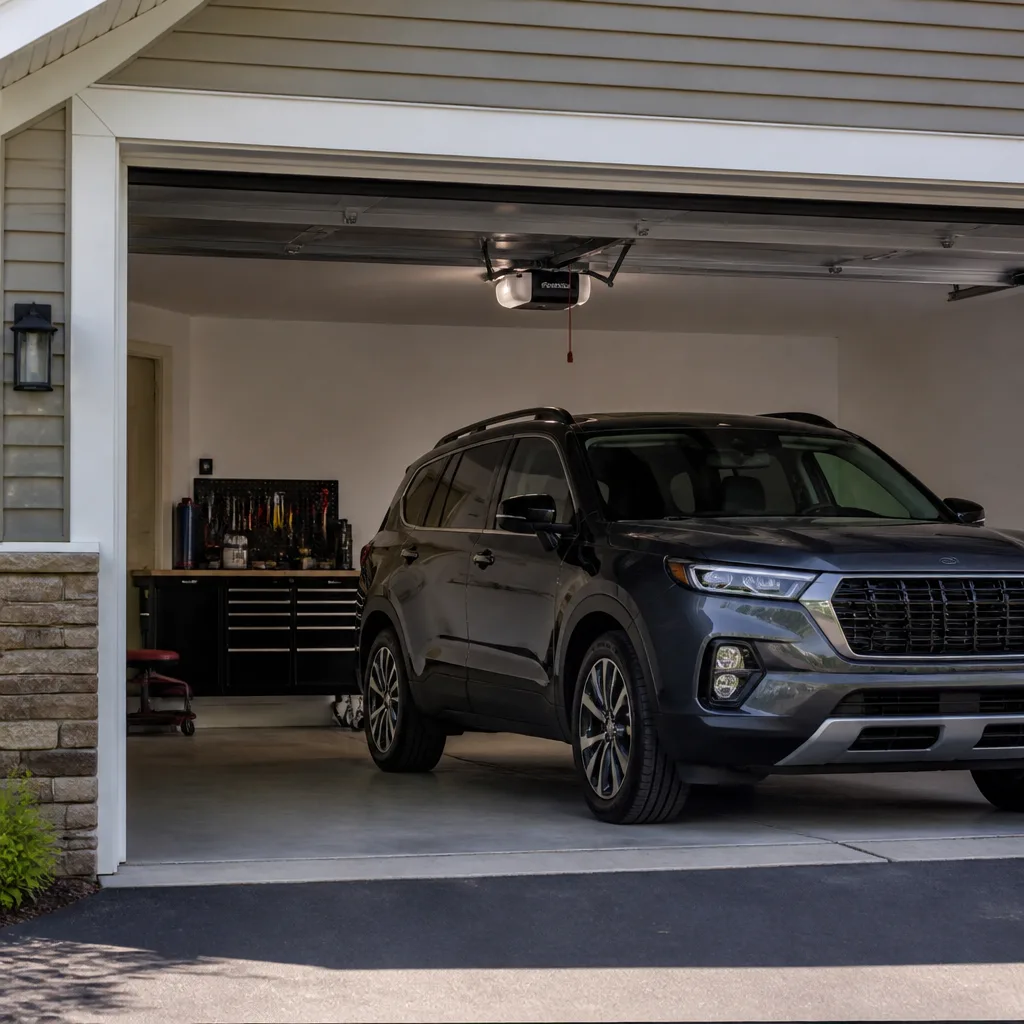 LiftMaster openers
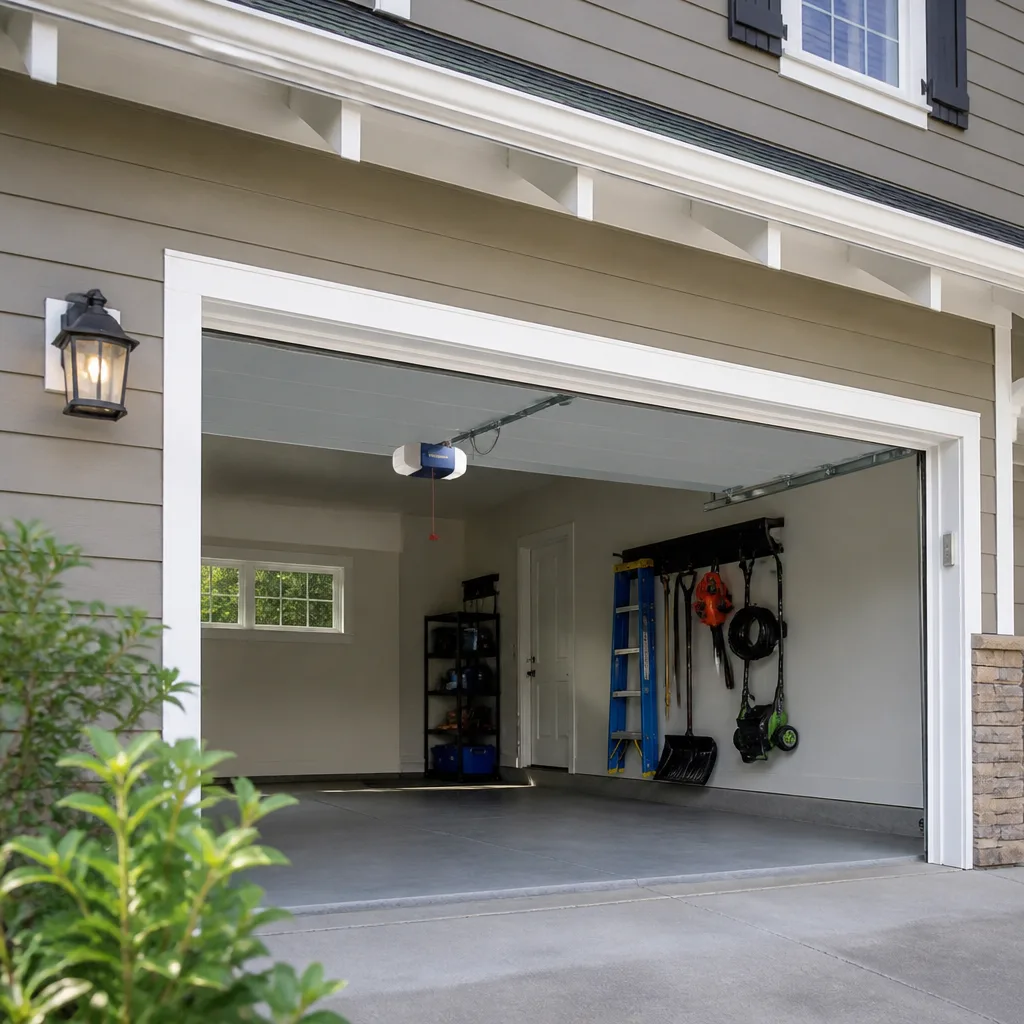 Chamberlain openers
Full 25-point door and opener safety check with every visit - springs, cables, rollers, tracks, and your LiftMaster or Chamberlain opener included
You get a price before we start. It does not change when the pro arrives.
Get your free estimateThe Complete Guide to Garage Doors in Beaumont
Most garage door guides are written for Phoenix or Denver. They talk about dry heat, snow load, and frost heave, and then a homeowner in Beaumont reads them and makes a decision that doesn’t fit the house or the weather. Southeast Texas is humid, the ground moves with the clay, and the region takes hurricane-season wind seriously. Advice built for a desert can put the wrong door on your opening and leave you with corrosion and misalignment inside a couple of seasons. This guide starts from Beaumont conditions and works outward: materials, soil, wind ratings, brands, and the order of decisions that actually saves money.
Quick Answer
A garage door in Beaumont should be a steel door with a polyurethane core, galvanized or otherwise corrosion-resistant hardware, and a wind rating that matches what your opening and neighborhood require. Buy the material and hardware grade for the humidity first, then insulation, then opener compatibility. The order matters more than the brand name on the box.
Styles & brands we work with
- Raised-panel steel
- Carriage house
- Modern flush
- Full-view glass
- LiftMaster openers
- Chamberlain openers
Table of Contents
- How Does Beaumont Humidity Affect Garage Door Materials?
- What Does Beaumont’s Clay Soil Do to a Garage Door Over Time?
- Wind Ratings in Jefferson County: What “Hurricane-Rated” Really Means
- The Brands You’ll Actually Find on Beaumont Doors
- The Right Order to Make Garage Door Decisions
- Repair or Replace? A Decision Framework
- A Maintenance Rhythm for Southeast Texas
- What You Should Never Adjust Yourself
How Does Beaumont Humidity Affect Garage Door Materials?
Beaumont gets close to 58 inches of rain a year and the air stays heavy most of the year. That combination is hard on garage door hardware. Steel panels themselves hold up, but the hinges, rollers, track, and fasteners around them are where moisture does its work. Standard zinc-plated hardware will start to show surface rust on a door that faces the weather, and once rust sets in at a hinge, the roller stops turning freely and the door starts to drag.
What holds up best in this climate, in our experience:
- Galvanized or hot-dipped hardware. The zinc coating lasts far longer than a thin electroplated finish in humid air.
- Polyurethane-insulated steel panels. The foam core is dense and bonded to the steel skin, so the panel resists denting and the door holds its shape. It also keeps the heat out.
- Nylon rollers. They don’t corrode the way steel rollers do and they run quieter, which matters on an attached garage.
- Powder-coated or factory-finished steel. A proper factory finish protects the panel edges where moisture creeps in first.
Wood is the material we steer people away from here. It looks good on day one, but in Beaumont’s humidity a wood door wants annual sealing, it swells and sticks at the edges, and the bottom section is usually the first to go. Basic unpainted aluminum is lighter but dents easily and its hardware still corrodes. If your garage door in Beaumont faces west or south and takes the afternoon sun and rain head-on, the material choice matters even more.
What Does Beaumont’s Clay Soil Do to a Garage Door Over Time?
The clay under much of Beaumont swells when it’s wet and shrinks when it dries, and that movement is slow but relentless. A garage slab moves with it. Over a few years, a floor that started level can tilt just enough that the door’s bottom panel no longer meets the ground evenly. Nothing is broken. The opening has simply changed underneath the door.
What that looks like in practice:
- The bottom seal develops a gap on one side and daylight shows through.
- Rain blows in under the bottom panel and puddles near the threshold.
- The door closes but the bottom section binds against the frame on one side.
- The weather seal wears out faster because it’s being crushed on one end and stretched on the other.
A bottom seal replacement is a small repair compared to the water damage that comes from a persistent gap. If you notice a draft or daylight at the bottom corner, it’s worth having the threshold and bottom-panel alignment checked before the rainy season. A technician can tell you whether the seal needs replacing, whether the bottom bracket needs adjustment, or whether the slab has settled enough that the door’s travel limits need to be reset. That last one is not a homeowner adjustment.
Wind Ratings in Jefferson County: What “Hurricane-Rated” Really Means
Beaumont sits in a wind-borne debris region, which means local building requirements take wind pressure seriously. “Hurricane-rated” on a spec sheet is not one number. It’s a package: a design pressure rating expressed in pounds per square foot, a maximum wind speed, and often a required hardware set (heavier hinges, additional struts, reinforced track, sometimes a specific center bracket). A door can carry a high wind rating label and still fail if the door is installed with the wrong reinforcement for its width.
What actually matters on your opening:
- The design pressure for your opening size. Wider and taller doors need more reinforcement to hit the same rating. A rating that’s fine on a single-car door may not be enough on a double.
- Whether the reinforcement is installed. Struts and brackets that ship with the door but aren’t mounted don’t do anything.
- Whether the track is anchored properly. Wind load goes into the framing through the track brackets, so the fasteners and framing behind them matter as much as the door.
- Whether your opener is rated for the door’s weight with the reinforcement added. Extra struts add weight. An opener sized for the bare door can struggle after reinforcement.
Ask your city’s building department what applies to your property before you buy, and ask for the wind rating documentation on the specific door and reinforcement package, not a general claim. For repair and replacement work around the opening, see our garage door repair page. A correctly rated door that’s hung on loose brackets is a rating on paper only.
The Brands You’ll Actually Find on Beaumont Doors
Drive through Beaumont neighborhoods and you’ll see the same names come up again and again, because they’re the brands builders install and the ones with parts that stay available. Knowing what’s on your door tells a technician a lot before anyone touches it.
- Clopay and Amarr are the most common steel sectional doors we see on homes in Beaumont. Both have deep parts catalogs, which matters when a panel or hinge needs replacing years down the road.
- Wayne Dalton doors show up on a lot of homes, especially the foam-core models. Their hardware has its own quirks, and a technician who knows the line can spot wear patterns faster.
- LiftMaster and Chamberlain openers are on the majority of doors in the area, with Genie close behind. Parts and remotes are easy to source, and the diagnostic patterns are well known.
- Raynor doors and openers turn up on some older Beaumont homes and on commercial-leaning residential installs.
If you don’t know the brand, look at the door’s end stile or the opener’s motor housing. The label is usually there. Our team works with equipment from LiftMaster, Chamberlain, Genie, Clopay, Amarr, Wayne Dalton, Craftsman, and Raynor, which means we can identify the system and source manufacturer-spec parts rather than improvising. That’s one reason we focus only on garage doors, and you can read more about how Lantern Garage Door Repair approaches the work.
The Right Order to Make Garage Door Decisions
Most homeowners make these decisions in the wrong order and pay for it. They pick a brand, then pick an opener, then think about insulation, and discover at the end that the opener is undersized for the door’s weight or the door won’t fit the reinforcement their wind rating requires. Sequence it correctly and each decision supports the next.
- Material first. Steel with a polyurethane core for Beaumont’s humidity and heat. Decide wood or aluminum only with a clear reason, and know what you’re signing up for in maintenance.
- Insulation R-value second. If the garage shares a wall or ceiling with conditioned space, insulation matters for comfort and for keeping the space usable in summer. A higher R-value means a thicker, heavier door.
- Wind rating and reinforcement third. Match the design pressure to your opening and confirm what reinforcement is included and installed. This adds weight, which feeds into step four.
- Opener compatibility fourth. Size the opener to the door’s actual weight with all reinforcement and insulation in place. If you’re replacing an opener, LiftMaster, Chamberlain, and Genie all have models with the lift capacity for a reinforced door, but the model has to match the door.
- Hardware grade last, but not least. Galvanized hinges, nylon rollers, sealed bearings. This is where the door’s long-term reliability in Beaumont’s climate is decided.
Doing it in this order means you buy the door once. Skipping a step usually shows up as an opener that strains, a door that sags, or a hardware set that rusts out early. When you’re ready for a measured quote, our garage door repair page covers the repair side, and our team can walk you through a full replacement from measure to install. If you’re in Beaumont and want brand-specific guidance, call for a free estimate and we’ll go through the sequence with your specific opening.
Repair or Replace? A Decision Framework
Not every failing door needs to be replaced, and not every door worth saving can be. Here’s how we think about it.
Repair usually makes sense when:
- The door is structurally sound and the panels are intact. A spring, cable, roller, or hinge failure is a straightforward repair.
- The opener has failed but the door itself moves freely by hand and the panels are in good shape. That’s a garage door opener repair job, not a door job.
- The bottom seal or threshold has worn out but the door and track are fine.
- The door is only a few years old and the failure is isolated to one component.
Replacement is usually the better call when:
- Multiple panels are rusted through, dented, or the door is sagging across its width.
- The door’s design pressure doesn’t match what the area requires, and retrofitting reinforcement isn’t practical.
- The hardware and track are uniformly worn or corroded, so you’d be replacing nearly everything anyway.
- The insulation is inadequate for the space and the door isn’t the right weight class for a better opener.
A clear diagnosis before any work is approved is how we operate. You should know which category your door falls into before you decide, and you should have a written price for each path. Call (833) 549-9776 for a free estimate.
A Maintenance Rhythm for Southeast Texas
A little upkeep goes a long way in Beaumont’s climate. These are the checks that matter most:
- Once a month, look at the hardware. Run your hand along a hinge or two. If there’s rust blooming at the pivot, it’s time to plan a hardware upgrade to galvanized.
- Every few months, lubricate the moving parts. A garage-door-rated lubricant on hinges, rollers, and the spring coils (never your fingers near the springs) keeps things smooth and slows corrosion.
- Check the bottom seal each season. Look for daylight, cracks, or a gap on one corner. This is where Beaumont’s clay movement shows up first.
- Watch the door’s travel. If it starts stopping short, reversing unexpectedly, or sounding different, have it checked. Electronics and mechanical wear both show up here.
- After a storm, check the opening. Look at the track brackets and the framing above the door. If anything looks shifted, don’t cycle the door until it’s inspected.
None of this requires tools beyond a rag and a can of lubricant, and it’s the difference between catching a small issue and dealing with a bigger repair. A door that’s maintained well in this climate can last a long time. A door that isn’t will show it in the hardware first.
What You Should Never Adjust Yourself
Garage door springs and cables are under extreme tension. If a spring or cable lets go while you’re working near it, the result can be serious injury. We don’t give step-by-step instructions for spring or cable work, because that work isn’t a homeowner job. If your door won’t open, won’t stay up, or you hear a loud snap, stop and call a trained technician.
The torsion spring above the door, the extension springs along the track, and the cables that run between them all store energy. A technician uses the right tools and the right technique to release and replace that tension safely. The same applies to the opener’s force and travel limits: adjusting them by guesswork can cause the door to reverse at the wrong point or fail to reverse when it should. We’d rather you call and have it done correctly than try to save a service call and get hurt. Our team is available at (833) 549-9776. We answer 24/7. Fast dispatch from 7am to 7pm, Sunday through Friday.
Common Mistakes to Avoid
- Buying a dry-climate door for a humid climate. A door rated for arid conditions can have hardware that corrodes quickly in Beaumont’s air. Ask what the hardware finish is rated for.
- Ignoring the bottom seal gap. That small gap lets rain and humid air in, and it’s the first sign the slab under the door has shifted. Fix it early.
- Sizing an opener for the bare door. Add insulation and wind reinforcement and the door’s weight goes up. An undersized opener runs hot and wears out.
- Assuming a wind rating label means the reinforcement is installed. Check that struts and brackets are actually mounted, not just shipped in the box.
- Letting wood doors go unsealed. In this humidity, a wood door needs annual attention. Skip it and the bottom section goes first.
- Mixing hardware from different brands. Hinges and rollers spec’d for one door line can bind on another. Match the manufacturer’s parts.
- Trying spring or cable repairs yourself. This is the mistake with the worst consequences. Springs and cables are not a DIY adjustment.
See the difference
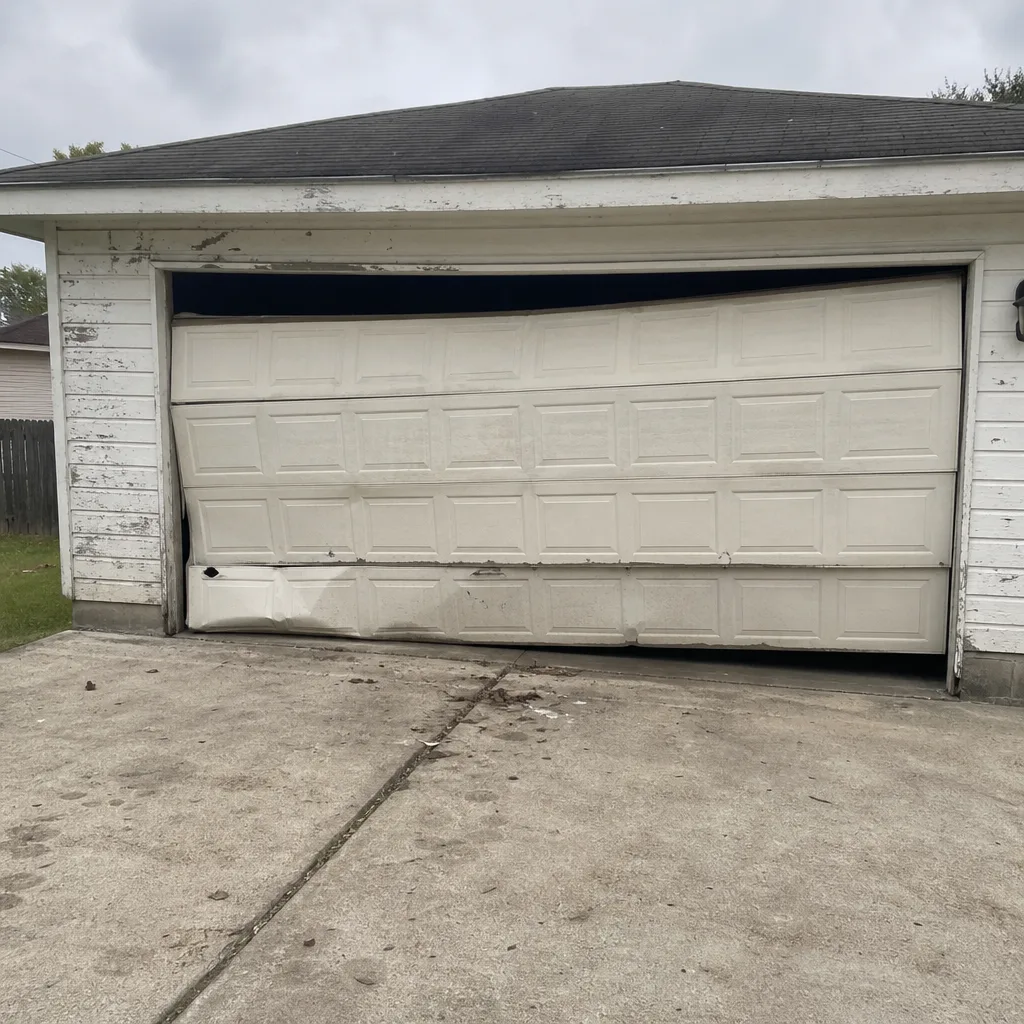 Before
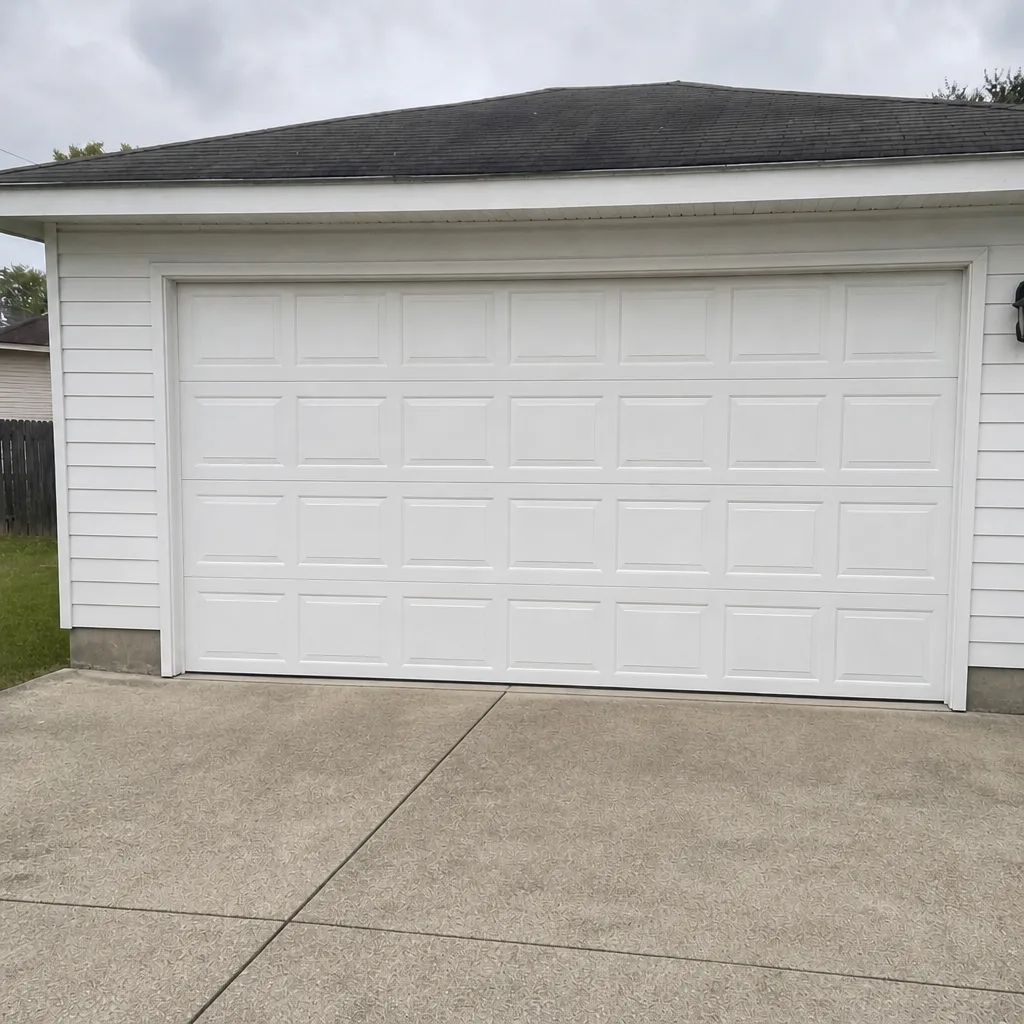 After
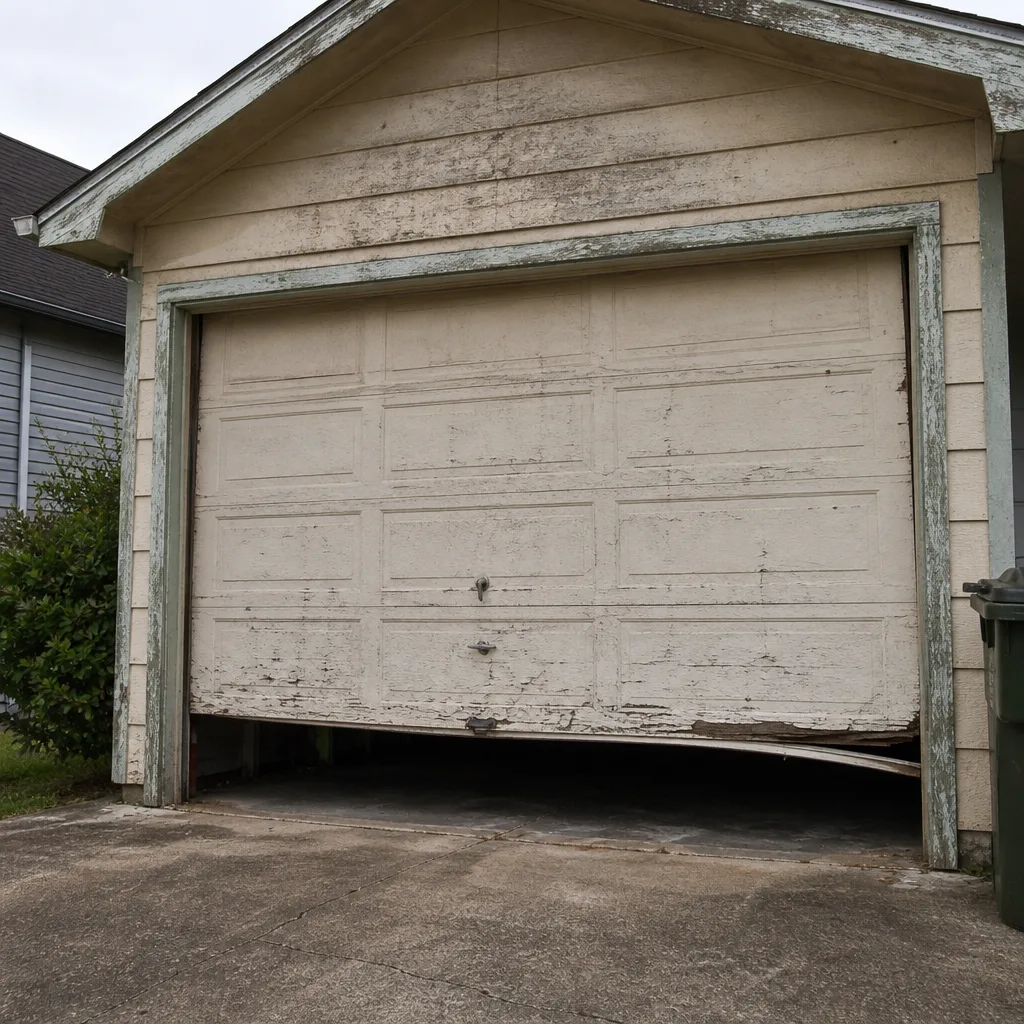 Before
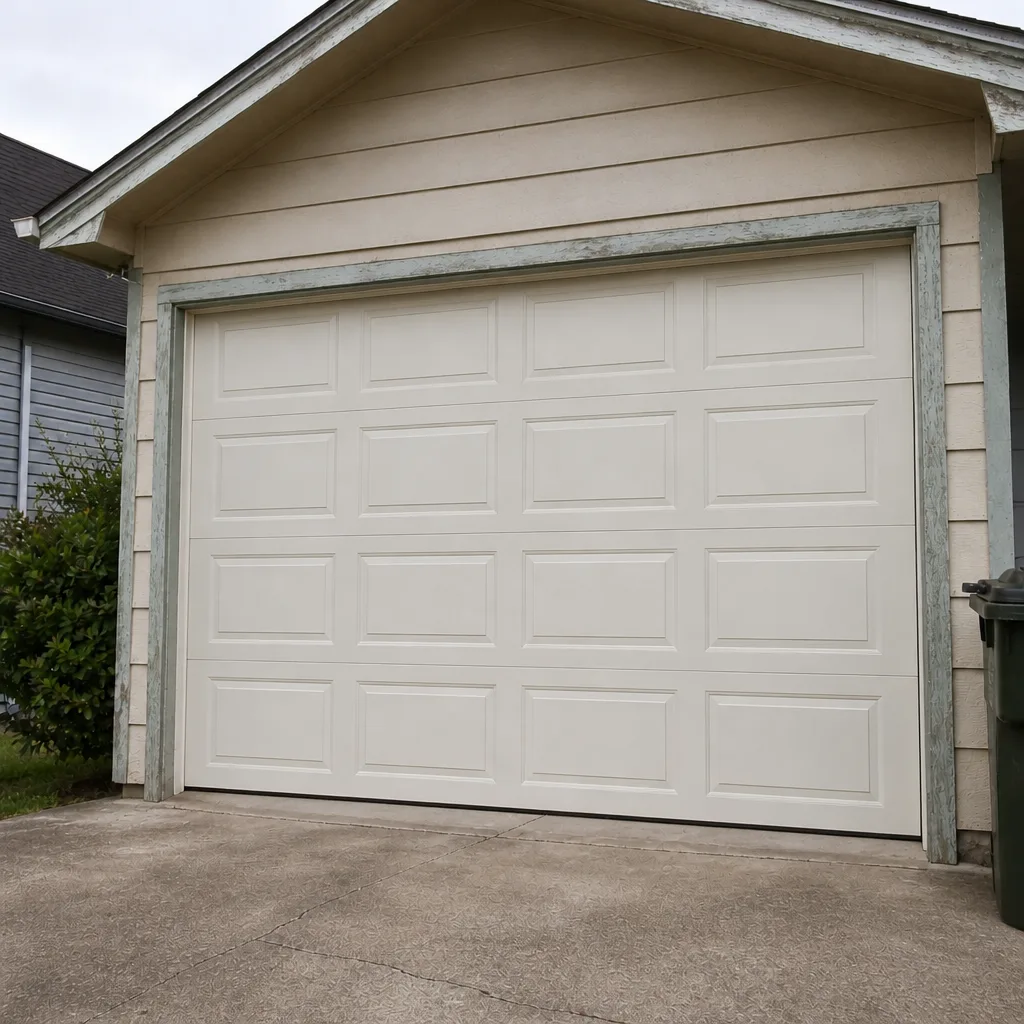 After
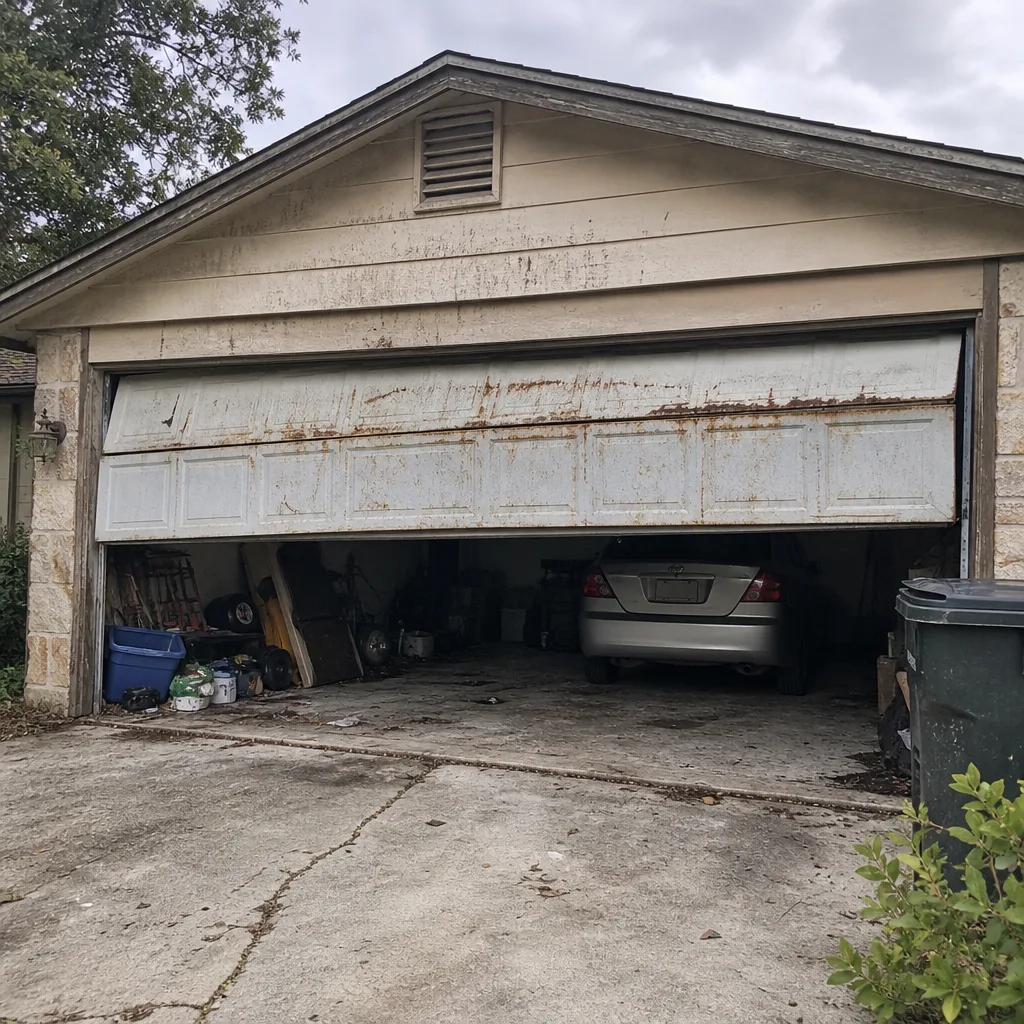 Before
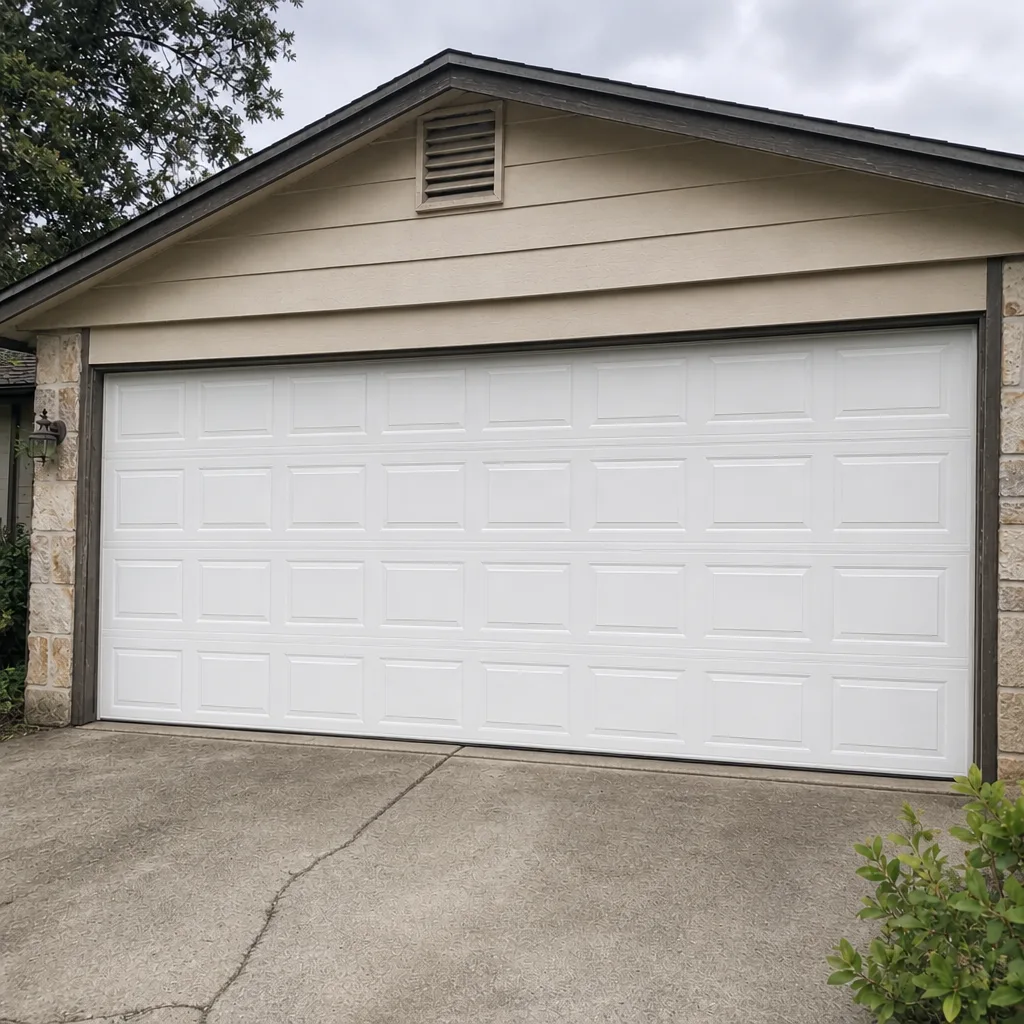 After
When to Call a Professional
Call a professional if you hear a snap and the door won’t lift, if the door comes down crooked or binds on one side, if the opener runs but the door doesn’t move, or if you see a gap at the bottom seal that’s getting worse. Call if a spring looks stretched or broken, if the cables are frayed or slack, or if the door has shifted after a storm. Call before you buy a new door if you’re unsure what wind rating your opening needs. Lantern Garage Door Repair offers free estimates in Beaumont. Call (833) 549-9776. We answer 24/7. Fast dispatch from 7am to 7pm, Sunday through Friday. Our technicians have up to 9 years of experience. The quote is agreed before any work starts, and the written estimate sets the final price.
Frequently Asked Questions
Garage door repair in Beaumont typically costs $150 to $600 depending on the job, with spring replacement in the $180 to $340 range for a single spring and roughly double for a matched pair. Opener repair usually lands between $120 and $300, and bottom seal replacement is often $90 to $180. These are typical estimates; your written quote is the final price. Call (833) 549-9776 for an exact quote. Estimates are free.
Yes, we offer same-day service for repair calls, and we dispatch fast from 7am to 7pm, Sunday through Friday. We answer 24/7, and a call outside dispatch hours is booked into the next opening. Call (833) 549-9776 and we’ll get you scheduled.
No. We diagnose the problem and give you a clear written price before any work begins, and that price is what you pay. If we find something beyond the original diagnosis, we explain it and you approve it before we proceed. Call (833) 549-9776 for a free estimate.
It depends on your opening size and what the area’s building requirements call for, so the right step is to ask your city’s building department. For any door, confirm the door’s design pressure rating matches your opening and that the reinforcement package is actually installed. We can help you read the documentation. Call (833) 549-9776.
Our technicians are experienced professionals, and we stand behind the work with a clear diagnosis and upfront pricing before anything is approved. Call (833) 549-9776 to discuss your door.
If the door panels are sound and move freely by hand, the opener is usually the problem and replacement of the opener fixes it. If the door itself is binding, sagging, or has damaged panels, the door is the issue. A technician can diagnose it in a visit. Call (833) 549-9776 for a free estimate.
The Bottom Line
Beaumont’s humidity, clay soil, and wind requirements are not afterthoughts in a garage door decision. They’re the starting point. Choose galvanized hardware and a steel door with a polyurethane core. Watch the bottom seal because the ground under the door moves. Match your wind rating to your opening and confirm the reinforcement is installed. Then size your opener for the door’s real weight. That sequence is what makes a door last in this climate. If you want help working through it for your specific door in Beaumont, call (833) 549-9776. We answer 24/7. Fast dispatch from 7am to 7pm, Sunday through Friday.
Written by the team at Lantern Garage Door Repair.